

Parallel Realities: One Investigation. Multiple Perspectives. How the Past Can Impact the Present.
Author’s Note
References to police reports, investigative findings, and excerpts throughout this article are taken from my Columbia Police Department case file, including investigative reports prepared during the investigation, along with my own memories and reflections. Some names and addresses have been redacted to protect the privacy of friends mentioned in the reports. If they are ever comfortable sharing their perspectives, I would be honored to include their voices in the future.
For years, I believed I understood the story of the days that changed my life because I lived them.
While I was fighting to survive, my world became very small. Every thought was focused on staying alive and finding a way home. I wasn’t thinking about what was happening outside of the home I was trapped in or what was unfolding back in my neighborhood. Survival didn’t leave room for anything else.
What I didn’t realize was how much was going on beyond what I could see.
When I requested a copy of the police reports in 2006, I thought I was searching for one missing piece, the name of the woman who stopped her car, opened her door to a frightened, partially clothed, barefoot fourteen-year-old girl, and drove me home to safety. I had wanted to thank her for years but never knew her name.
Finding Donna became one of the greatest gifts to come from those reports.
But the reports gave me so much more than a name.
They uncovered parts of my story that I had never had the opportunity to witness. They gave me a clearer understanding of everything that had been happening while I was simply trying to survive, and in doing so, they brought a sense of clarity and closure I never expected to find.
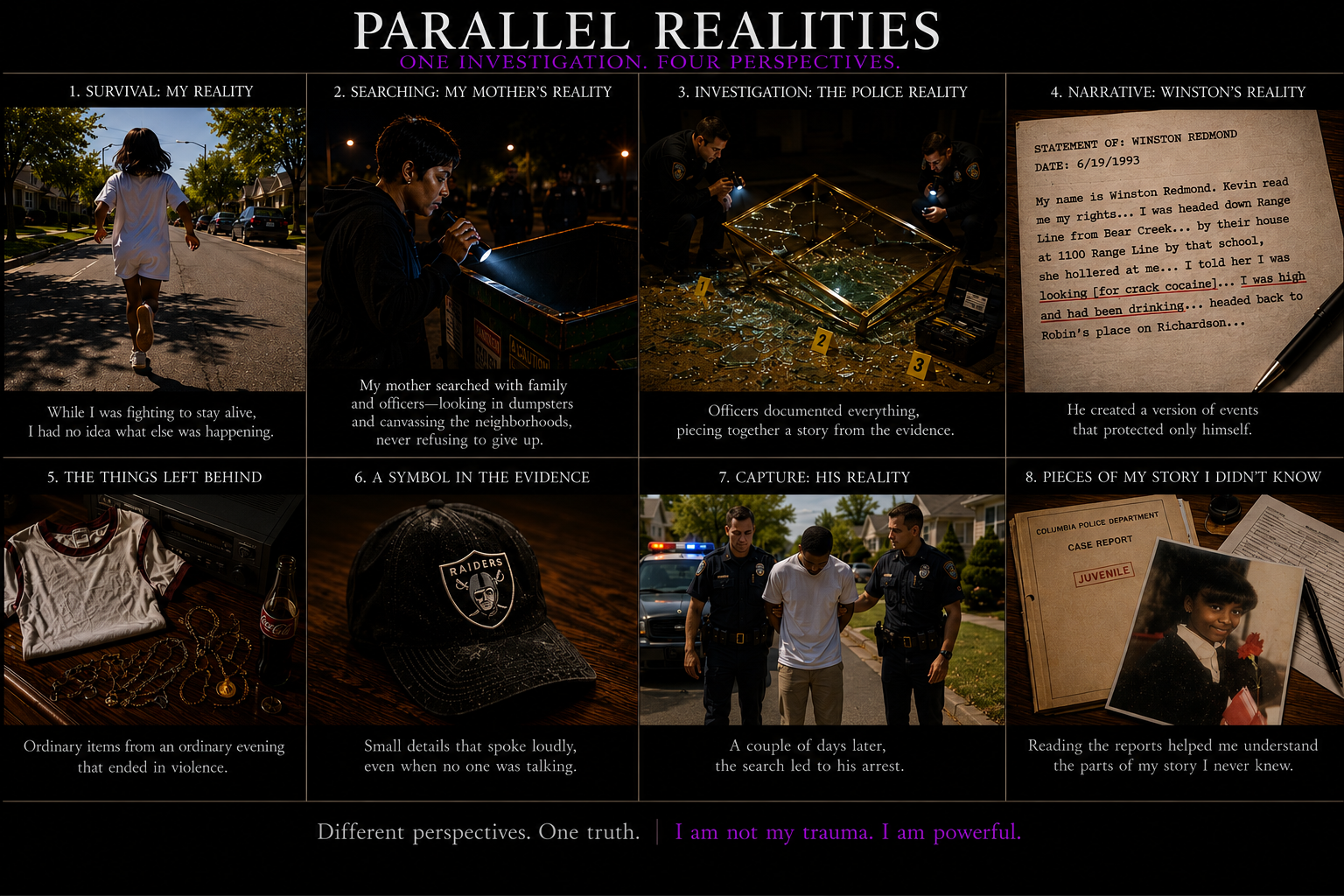
Survival: My Reality
During my kidnapping, my focus never changed. I wanted to live.
Every decision I made was centered on returning to my mother. I wasn’t thinking about investigations, crime scenes, evidence, or search efforts. I simply wanted to make it home.
That is why reading the reports over a decade later was such a profound experience. They showed me what had been happening while I was fighting for my life.
Searching: My Mother’s Reality
While I was missing, my mother refused to stop looking for me.
The reports describe officers responding to our home after midnight. Family members gathered. Friends of the family joined the search. Officers searched the neighborhood, dumpsters, checked yards, and canvassed the area. At one point, my mother followed what she believed might be an important lead after learning about a black Raiders cap found inside our home. Believing it belonged to someone she knew, she went with relatives to a friend’s house hoping she would find answers.
Reading those pages allowed me to see my mother’s determination from a perspective I never could have understood at that time, but understand now since becoming a parent.
While I was desperately trying to get home, she was doing everything she could to find me.
Investigation: The Police Reality
The officers were seeing something entirely different.
One report begins:
“On June 19, 1993, at approximately 12:00 a.m., I was contacted at my residence by Sergeant Schwandt… Sergeant Schwandt requested that I respond… and determine if an evidence technician was going to be needed.”
That detail alone stood in sharp contrast to Winston’s account.
If his version of events had been true, there would have been little reason to preserve our home as a crime scene.
Instead, officers documented evidence of what appeared to be a violent struggle.
The reports describe shattered picture-frame glass just inside the doorway, a brass-framed glass end table overturned with broken glass scattered across the floor, furniture pushed out of place, and broken decorative items. It was obvious that there had been a physical struggle.
The broken glass from the large picture never left my memory, because I had been strangled on top of it.
Reading about that night from the view of the detectives helped me understand the magnitude of the violence that occurred that evening. Even still, the report indicates that there was nothing to indicate that I had been injured during the struggle.
One officer reported that the VCR had not simply disappeared. Its cables had been carefully unscrewed, and it had been unplugged from the power source without disturbing the small decorative items that surrounded it. Officers found my T-shirt folded over the arm of the couch near the doorway. My necklaces were still lying on the coffee table with their clasps intact. An open bottle of soda remained beside them.
Ordinary objects from an ordinary evening had suddenly become evidence.
Narrative: Winston’s Statement
Winston’s statement presents a very different version of events.
Rather than paraphrase it, I believe it is important to allow readers to see his words exactly as they were written.
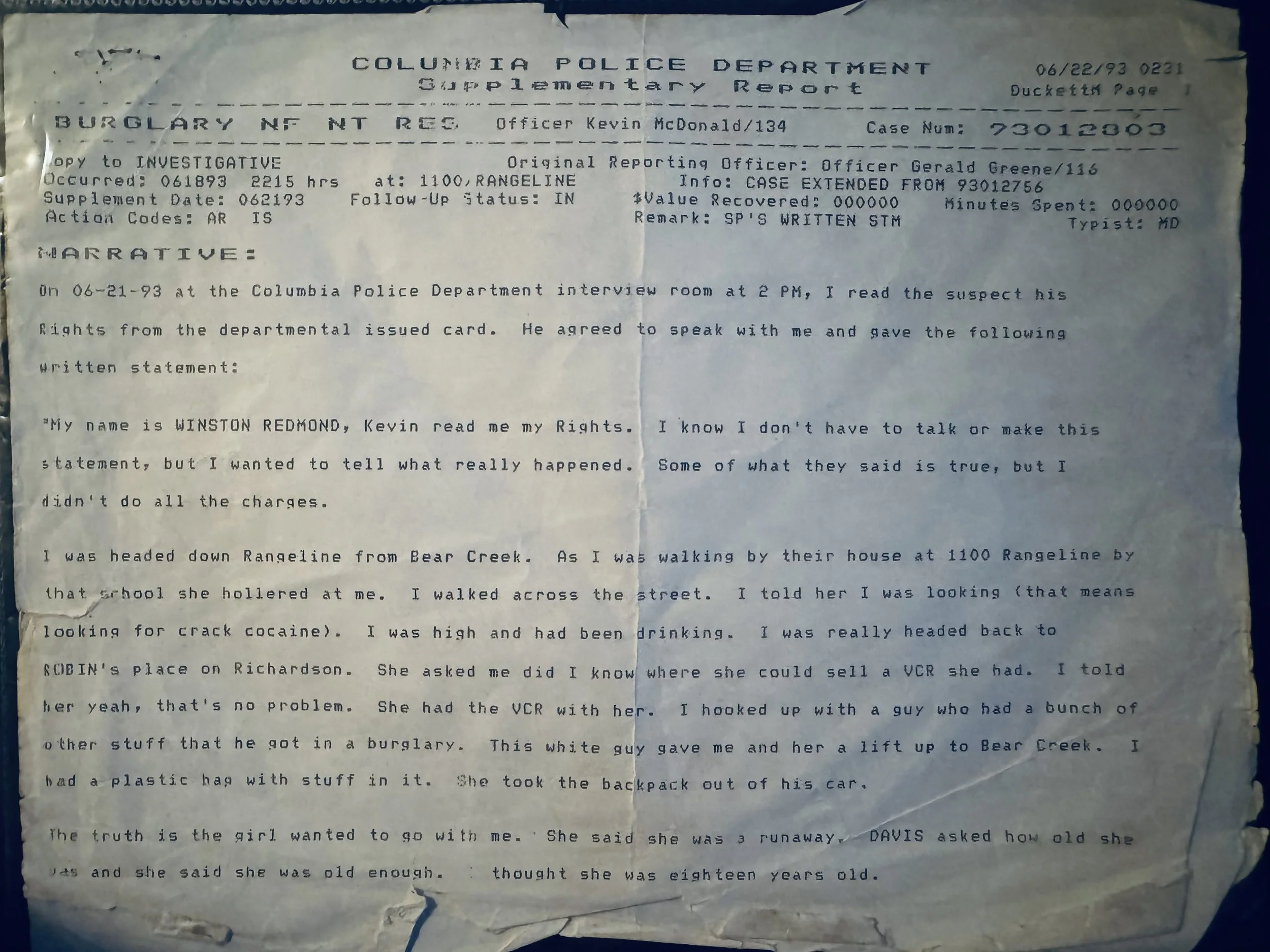
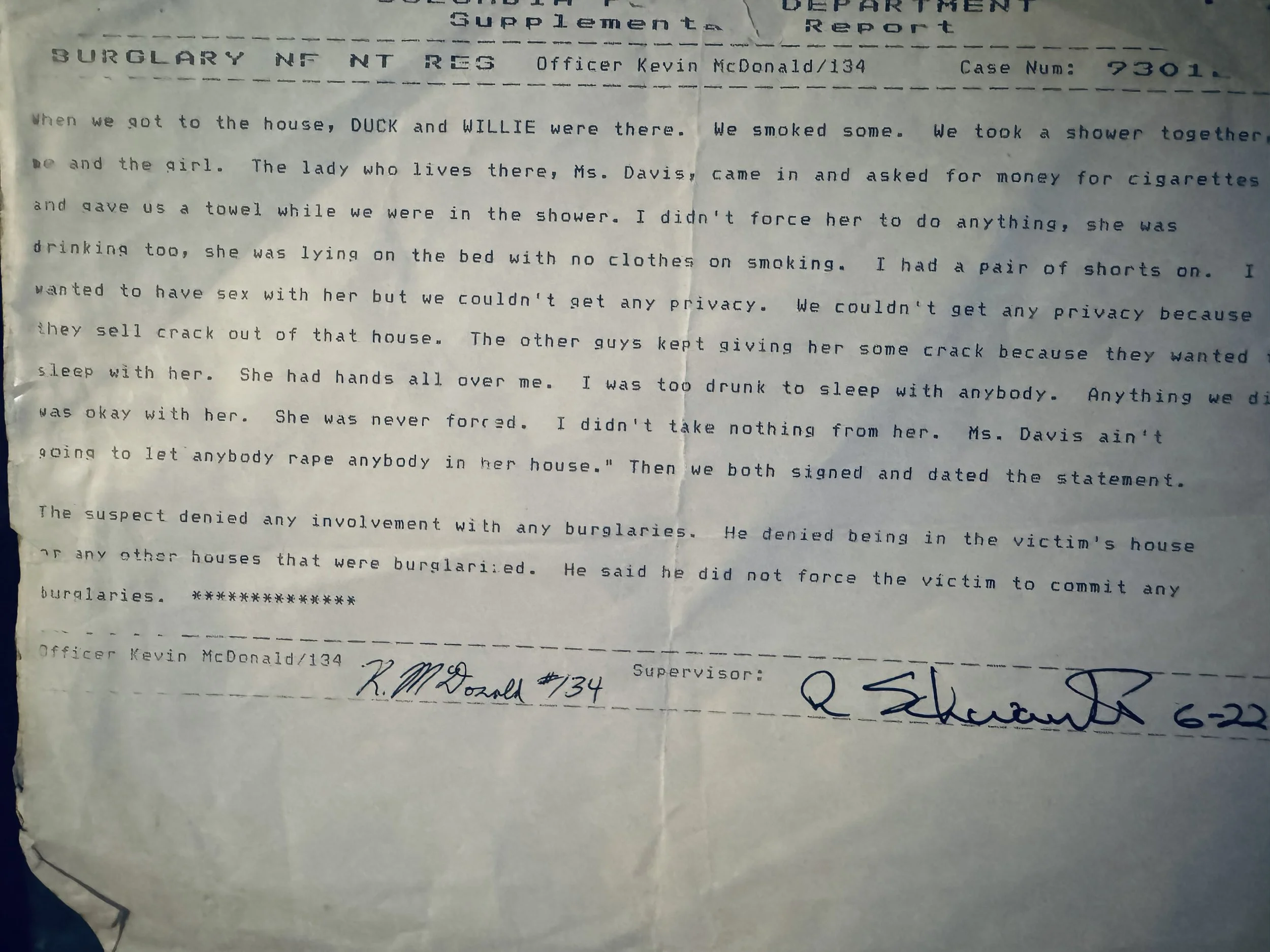
Nothing that he said about me or my actions were true.
As I compared his words with the documented condition of our home, the contrast is impossible to ignore.
His narrative attempted to portray consent and me being a willing participant.
The evidence stated otherwise.
The Things Left Behind
One of the most emotional parts of reading the reports was the ordinary things that I left behind.
The shirt I had worn that evening.
My necklaces.
My soda.
The VCR.
Those details reminded me that my evening had begun like any other.
Those items became silent witnesses to a life interrupted.
One of the reasons I was so excited to stay home that evening was because I wanted to record Drop Dead Fred. It was one of my favorite movies. I had the VCR set up and a VHS tape ready.
I never got the chance.
Winston had demanded that I unplug the VCR because he wanted to steal it.
Years later, reading the police reports and seeing the officers document that same VCR brought me back to that moment. It wasn’t just another piece of evidence. It was a reminder of the ordinary Friday night I thought I was going to have, and how quickly everything changed.
[See officer reports at the end of the article]
A Symbol in the Evidence
For years, I didn’t know there had been a black Raiders cap found inside our home.
Believing she recognized who the cap might belong to, my mother followed that lead with hope that it would bring her closer to finding me.
It became another reminder that while I was missing, countless decisions were being made in an effort to bring me home.
Capture
The days between my escape and Winston’s arrest were filled with pure terror. Returning home didn’t immediately bring a sense of safety because he was still free. A couple of days later, the search led to his capture and arrest.
I will share more about his capture and the officers’ reports in a future article.
The Child Who Had to Defend Herself
Due to Winston’s statement and the examination of my journal, I found myself defending my own credibility.
Two of my friends were subpoenaed.
My character was questioned.
I was viewed as a possible runaway.
I remember sitting in that courtroom watching him smile beside his attorney.
I also remember struggling through my testimony. Because of my emotional state, my prosecuting attorney told me they were going to accept a plea agreement instead of going to trial. Looking back, I understand why that decision may have been made. The criminal justice process can be overwhelming for anyone, especially a child.
I had to answer questions about my behavior while the adult who kidnapped and assaulted me offered an entirely different version of events.
That experience taught me something I now understand many survivors face.
When your credibility, your private writings, your friendships, and your character all become part of the case, it can feel as though you are being asked to prove not only what happened, but that you deserve to be believed.
Sometimes surviving the crime is only the beginning.
Sometimes survivors are also asked to defend the truth.
What I See Now
A few statements attributed to me in the reports are things I do not specifically remember saying, mainly because they do not match my memory of events.
That observation is not meant as criticism of the officers involved. If anything, it has given me a greater appreciation for how difficult their job can be. The reports were written by people trying to document information from a traumatized child during an active investigation. They were working with the information available to them at the time and doing their best to preserve details that might later become important.
It also reminded me of the importance of the accuracy of the documentation. Whenever possible, survivors should review reports, ask questions, and seek clarification if something does not seem right.
These reports are invaluable records, but they are still created by human beings documenting events involving other human beings during moments of crisis. Errors can be made.
As I continued reading, I found myself noticing the names of officers and detectives throughout the file. I do not remember any of them personally, but I can see their efforts. I was able to join them throughout their journey of trying to find out what happened, preserve evidence, and follow leads.
That is one of the reasons I care so deeply about speaking to future law enforcement officers today.
Every report represents a real person. Every interaction can either help someone begin to heal or cause further harm. In the end, the reports did more than document evidence.
I am grateful for their work and support of my family, the determination of my mother, the love and prayers of family and friends, and Donna, a Good Samaritan who did not hesitate to drive me home.
Reflections
When I speak to future officers at the San Diego Regional Police Academy, I am sharing my story as a survivor and as someone who has now seen an investigation through the eyes of the people who responded, documented, searched, and worked to reconstruct what happened. Those pages are more than paperwork.
I am grateful that my therapist encouraged me to request the reports, however, I wish I had my complete investigative file, including evidence photos, recordings, and my mother’s 911 call, all of which has since been destroyed.
Beyond the Investigation
I’ve come to understand that trauma doesn’t always end when the investigation ends.
Sometimes it quietly influences decisions decades later.
Several years ago, I considered pursuing legal action in an unrelated matter. There was substantial documentation supporting what had happened, and I sought legal counsel to understand my options.
One of the first things I was told was that if the case moved forward, my history would likely become part of the litigation. My past trauma, treatment history, and other aspects of my life could all become part of the case. The suggestion was that my previous experiences might be used to explain why I was so deeply impacted by the situation I was facing.
I also discussed this situation with my psychiatrist. She also emphasized the importance of continuing to follow my treatment plan because of the fact that it could become part of the legal process.
In the end, I chose not to move forward.
That decision wasn’t because the evidence wasn’t there.
It was because I understood what it meant to once again have my history examined. It made me realize that the fourteen-year-old girl who sat on the witness stand never completely disappeared.
Experiences like that don’t simply become memories.
They become part of the framework through which we evaluate future decisions, including whether we are willing to place our lives under that level of scrutiny again.
That is one of the lasting impacts of trauma that people don’t often see.
In spite of the outcome, I don’t regret using my voice. I regret allowing fear and the anticipated emotional toll to determine what came next. Today, I choose differently. I intend to continue using my voice, not only for others, but for myself.
There is still more to uncover. I find that there is beauty in connecting the dots between the past and the present. If nothing else, I am learning more about myself.
And I look forward to sharing those discoveries, one piece at a time.
To learn more about LaDonna Renee VST Foundation, Inc. and our mission, visit www.findyourvoicevst.org or become a subscriber on Substack.
You can also follow me on Facebook by searching LaDonna Renee VST Foundation Inc., and visit me on Instagram and TikTok for additional stories, updates, and Reels. Thank you for walking beside me during the second half of my journey! Stay tuned for more insight on my case.
To see copies of the evidence reports visit: https://open.substack.com/pub/ladonnarenee/p/parallel-realities?r=6tzv5j&utm_medium=ios
How I Escaped my Kidnapper: The Moment I Chose to Move Despite Fear
In the early morning hours of June 19, 1993, I escaped the man who had kidnapped, assaulted, and terrorized me hours.
The night before, I had made a plan.
If I survived until morning, I would ask for a shirt, ask to use the bathroom, and then run.
It seemed simple enough in my mind, but fear has a way of complicating everything.
When morning came, I asked to use the bathroom. This was my chance.
But when I opened the bathroom door, he was standing right there in front of me.
In that moment, I thought, I’m not going to make it out alive.
I was escorted back into the room where I had been held captive. What followed was another assault and another attempt to control me through violence.
Then he went for my throat.
My neck was already sore from the strangulation I had endured throughout the night. I was physically, emotionally, and mentally drained. I put up what little resistance I had left, and he squeezed harder.
I truly believed that was the end.
Then, for reasons I still cannot fully explain, his grip loosened.
Just enough.
I wiggled free.
Without thinking, I ran toward the bedroom door.
I glanced back once.
He was on the bed, on his knees.
I opened the door and ran.
I ran through the hallway and into the living room. There was a man and a woman there, along with two little girls who were awake. The front door stood open. The screen door was unlocked.
And I ran.
I didn’t stop.
I didn’t look back.
I didn’t care that I had no shoes. I didn’t care that I wasn’t fully clothed. I had already decided that if an opportunity came, I was going to take it.
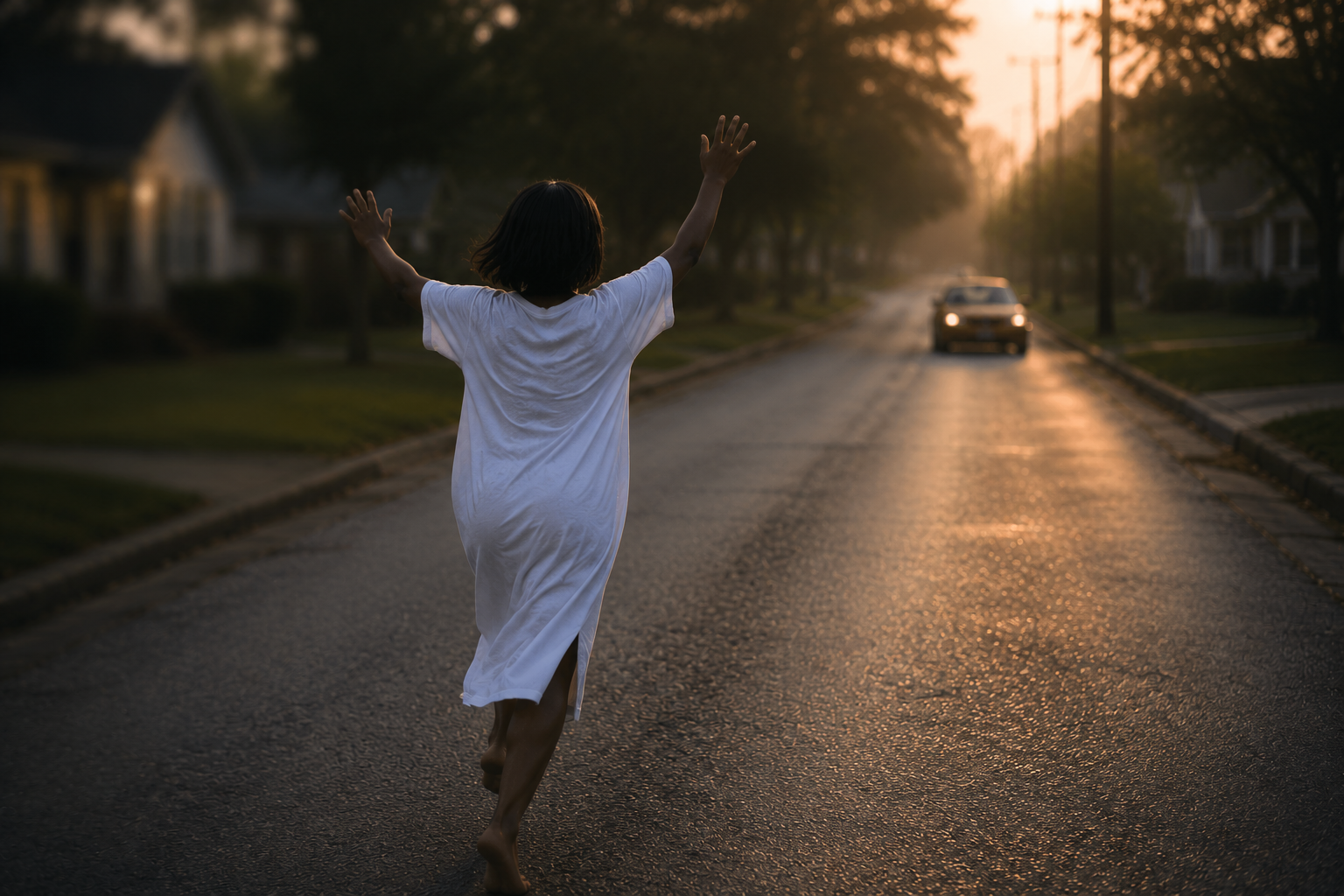
As I ran down the street, I saw a car coming toward me.
I started waving my arms.
I was screaming.
I was crying.
I ran directly in front of the vehicle.
The woman driving stopped.
She didn’t hesitate.
She didn’t drive away.
She didn’t ignore me.
She stopped.
Somehow, through the fear and shock, I was able to tell her where I lived. She let me in, and drove me home to safety.
During the entire time I was gone, I never knew if I would make it home alive.
There were countless moments when I wanted to run, wanted to ask for help, wanted to fight back. But every scenario ended with the same terrifying question:
What if it doesn’t work?
Fear kept me frozen.
Fear kept me silent.
Fear kept me surviving one moment at a time.
But something was different that morning.
I believe it was God.
I believe it was a quiet voice telling me:
Run.
Now is the time.
Looking back, everything seemed to align.
The bedroom door was unlocked.
The front door was open.
The screen door was unlocked.
The people in the house didn’t stop me.
Unfortunately, the neighborhood was quiet.
But at the exact moment I needed help, a single car came up the road.
A woman I had never met stopped and helped save my life.
For years, I have described that morning as divine intervention.
When I looked back before running, it didn’t seem like he was moving at all. In my mind, I imagined angels holding him back, creating just enough space for me to escape.
Whether others see it that way or not, that is how it felt.
Everything lined up.
Everything.
And I ran.
As I reflect on that morning, I also find myself thinking about the women who helped shape my story.
My mother is a survivor of many traumas, more than any one person should ever have to endure. There was a time when she had a gun held to her head. The gunman asked her if she was afraid to die.
Her answer was simple.
“No.”
Years later, she told me the truth.
She was terrified.
She was shaking on the inside.
But she didn’t let it show.
The entire time, she prayed to Jesus over and over again.
Prayer became her lifeline in a moment when she didn’t know if she would survive.
Perhaps that decision saved her life.
That same night, three people she loved were shot and killed. In the middle of unimaginable fear and chaos, she helped children get to safety.
Then there was Donna.
At just 21 years old, she was driving down a quiet street when she saw a young Black girl running toward her car, barefoot, partially clothed, screaming and crying.
She stopped.
What I didn’t learn until 2023 was that I was being chased.
Donna couldn’t have known exactly what was happening, but she made a split-second decision to help me anyway. In doing so, she may have placed herself in danger.
When I think about courage, I don’t think about people who aren’t afraid.
I think about people like my mother.
I think about people like Donna.
And I think about a fourteen-year-old girl who was terrified but ran anyway.
In spite of how much I’ve grown as a person, a leader, and a human being, I am still afraid.
I’ve spent years wishing that wasn’t true.
I wish I could move through the world without second-guessing people. I wish taking risks felt natural. I wish adventure felt exciting instead of dangerous. I wish trust came easier.
But life experiences have a way of shaping us, and trauma leaves fingerprints long after the moment itself has passed.
At this point in my life, I have learned to acknowledge my fear instead of pretending it isn’t there.
I may always carry some level of it.
That doesn’t mean I like it. It doesn’t mean it doesn’t frustrate me. It doesn’t mean I don’t wish things were different.
It simply means I accept that healing is not always about eliminating fear. Sometimes healing is learning how to keep moving while fear walks beside you.
That is what I did on June 19, 1993.
I was afraid, but I ran.
My mother was afraid, but she stood firm.
Donna may have been afraid, but she stopped.
The common thread isn’t fearlessness.
It’s courage.
It’s faith.
It’s choosing to move when every part of you wants to stay frozen.
Sometimes the safest choice is to wait.
Sometimes the bravest thing you can do is survive one more day.
And sometimes, when the moment is right, something deep inside tells you it’s time to move.
You’ll know.
Not because the fear disappears.
But because, for one brief moment, your desire for freedom becomes greater than your fear.
When I feel stuck, trapped in my thoughts, or afraid to take the next step, I think about that moment.
The moment I chose to move despite overwhelming fear.
And I continue to pray, just as my mother did, asking God to help me overcome obstacles, strengthen my faith, and quiet the fears that still try to hold me back.
As I close this chapter, I find myself feeling grateful.
Grateful for another chance.
Grateful for the people who helped save my life.
Grateful for the opportunity to keep growing, healing, and sharing my story.
Life has not been easy. It often feels like there is always another obstacle to overcome, another hurdle to navigate, another fear to face. Some days are harder than others.
But I am still here.
And I never take that for granted.
The truth is that not everyone receives a second chance. Not everyone makes it home. Not everyone gets the opportunity to heal, to grow older, to tell their story, or to discover who they were meant to become.
That reality breaks my heart.
In my heart, I pray for everyone’s safety. I pray for those who are struggling, those who are afraid, those who feel trapped, and those who are searching for a way forward.
And to those who never made it back, to those whose lives were stolen too soon, and to those who did not survive their trauma:
We remember you.
We honor you.
We carry your stories with us.
May we never stop working toward a world where more people make it home safely.
And may we never forget the lives that remind us why that work matters.
Because courage is not the absence of fear.
Sometimes courage is simply hearing the call and taking the next step anyway.
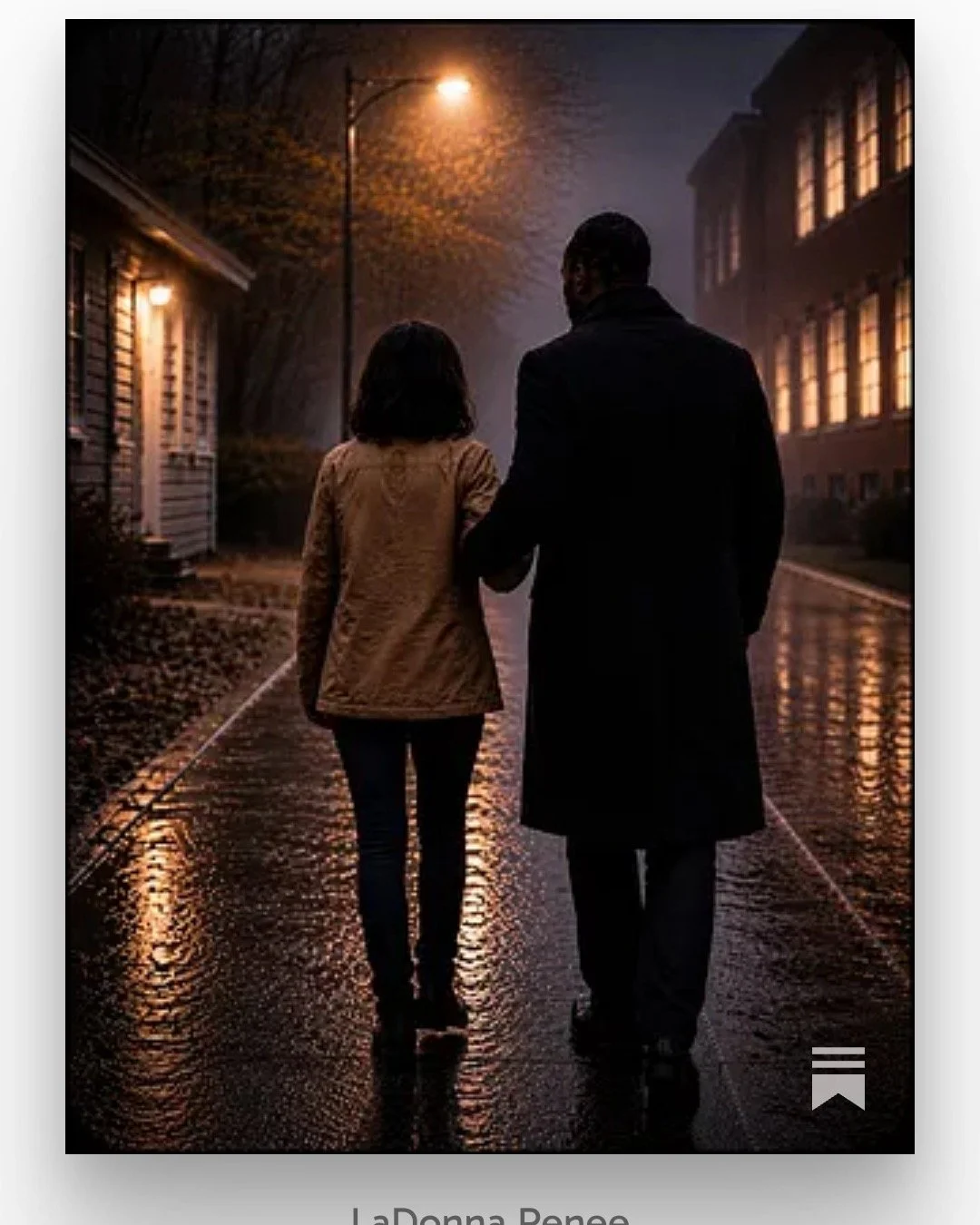
The Long Walk: A Journey Through Fear, Memory, and Healing
When survivors tell their stories, many begin by saying, “It started as a normal day.”
My story didn’t.
The morning of June 18, 1993, began with heartbreaking news. A family member called to tell us that my cousin, Yokie, had been found deceased.
My mother, my aunt, and I spent the day with family. We drove to be with relatives who were grieving, and I remember sitting quietly in a room filled with sadness. Family members talked, cried, and mourned. I remember staring at a recliner for what felt like hours. I don’t know why that particular chair stayed with me all these years, but it did.
I sat silently watching, soaking up the grief that filled the room and wondering how someone so sweet could leave us so early. I remember hearing bits and pieces of conversations, different versions of events, and details that didn’t quite make sense to me. The adults were talking, but I wasn’t really part of those conversations. I sat quietly, listening and trying to piece together what had happened while watching the people I loved mourn.
We stayed there all day. Eventually, night fell, and we drove home.
I was exhausted.
When my mother and aunt decided to go to the grocery store, I begged my mom to let me stay home. She was reluctant, but eventually she agreed.
I still think about that evening.
Not because my mother did anything wrong. She didn’t.
Like most teenagers, I wasn’t expecting danger to come knocking at my door. I wasn’t thinking about worst-case scenarios. I wasn’t thinking that something terrible was about to happen. I was simply at home, believing I would be okay.
At some point, there was a knock at the door. I opened it, and it turned out to be someone I knew. I never could have imagined what would happen next.
After he entered the house, he looked toward the back of the home, in the direction of my mother’s bedroom. It seemed as though he was trying to determine whether anyone else was there. Once he realized I was home alone, his attention shifted to me.
What happened next would change the course of my life.
Not just my body, but my mind.
Within moments, he turned to me and said the word “RAPE”, and attacked me.
He grabbed me by my throat and threw me against the wall. A glass picture frame shattered as my body hit it. He began to strangle me, forcing me down onto the broken glass beneath us. At the time, I didn’t feel the cuts. My focus was on trying to breathe. It wasn’t until later that I realized how much I had been cut due to the glass I had landed on.
I thought I was going to die.
My head felt like it was going to explode. My eyes felt as though they were being pushed from their sockets. Panic consumed me. Terror consumed me.
Then everything became white.
I remember seeing a bright white light. I remember seeing flashes of things I suddenly realized I might never do. Dreams. Milestones. Pieces of a future that seemed to be slipping away before it had even begun.
I remember thinking about my mother. I imagined her coming home and finding me there. That thought terrified me almost as much as the attack itself.
At some point, he told me that if I stopped screaming, he wouldn’t kill me. I listened and allowed my body to go still.
After a series of instructions and threats, he told me to pretend to be his girlfriend. Then we left the house on foot.
I remember walking through the drizzle and beneath the streetlights as we moved from one place to another. There were several destinations that night, but what has stayed with me all these years is not necessarily the places themselves. It is the fear that lived in the space between them.
Every time we started walking again, I wondered where we were going and what would happen when we got there. I didn’t know what was waiting for me at the next location, and with each step came the fear that the next place might be the
Those walks carried so much dread. The uncertainty. The fear of not knowing where my steps would lead or what would be waiting for me when I got there.
The sense that each step was possibly leading me closer to death.
The day began with grief as my family mourned the loss of Yokie.
Before that day was over, I would experience a loss of my own.
Not a physical death, but the loss of safety, certainty, innocence, and the belief that life would continue as expected.
A part of me survived that night.
But a part of me was left behind on that floor.
I find myself returning to that moment, to the shattered glass, the white light, the fear, and the walk into the darkness.
Sometimes it feels as though I never fully left.
As much as my life has moved forward, part of me remains frozen in those moments between the strangulation and the walk. Part of me is still that fourteen-year-old girl trying to understand what is happening, wondering if she is going to live or die.
Perhaps that is why the themes of my Instagram reel Forever 14 and The White Room continue to find their way into my writing.
Because those moments did not simply happen to me.
In many ways, they became a place I have spent the last three decades trying to leave.
And yet, I always seem to find my way back.
Not because I want to stay there, but because some stories and journeys deserve to be remembered, celebrated, and reflected upon.
And perhaps because the fourteen-year-old girl I used to be deserves to be found.
And with every listening ear, every word of encouragement, and every act of support, she heals a little more.
Little by little, she comes back to life.
June: Thirty-three years later, June still speaks to me. Reflections on innocence, betrayal, and resilience.
The entire month of June is a trigger for me.
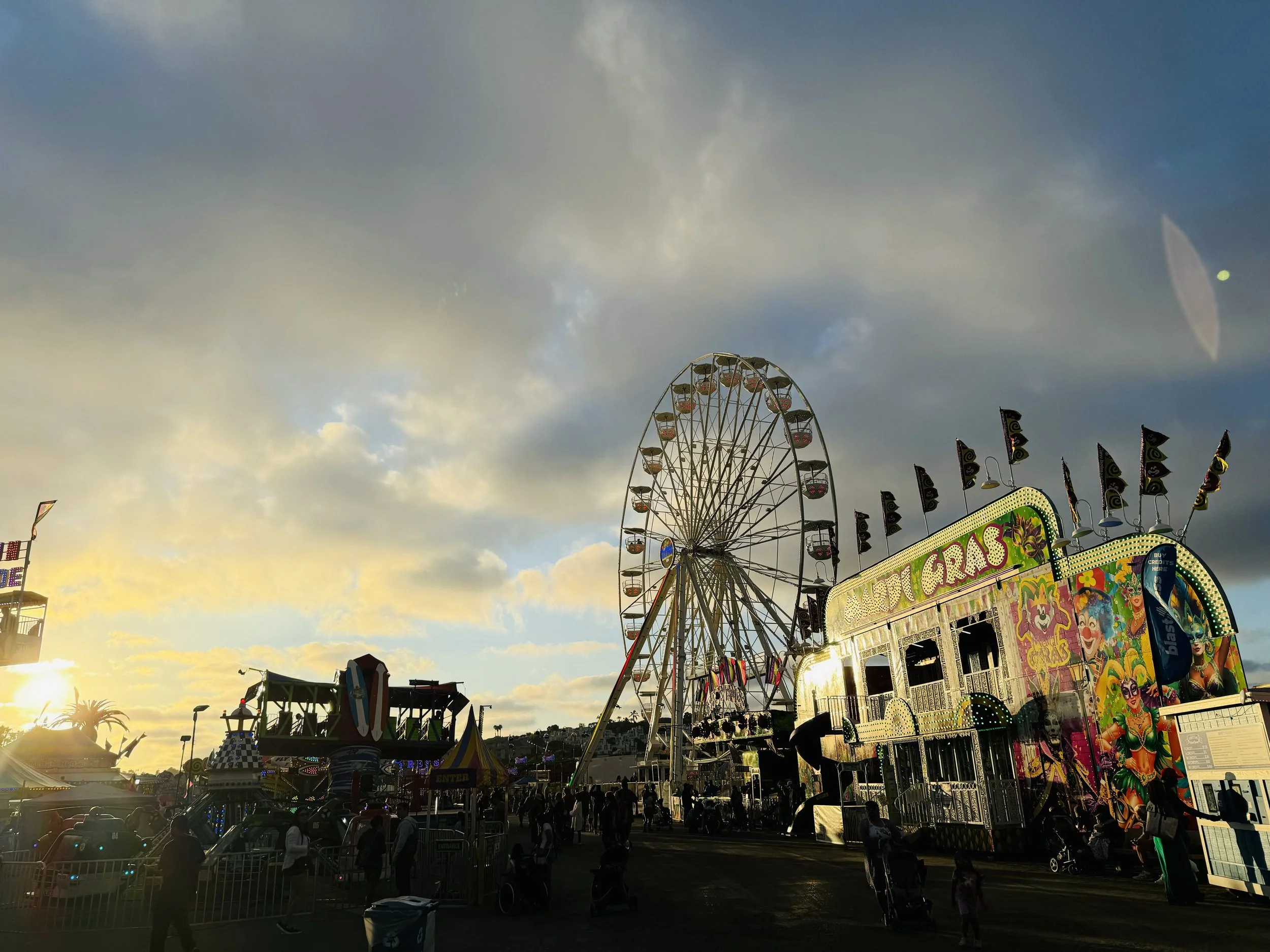
At the beginning of the month, I reflect on what it felt like to finish up my eighth-grade year and how anxious I was about becoming a ninth grader. I remember being excited about sleeping in and the possibility of hanging out with my friends. The carnival was in town, and I remember going and having a great time. I remember the warmth of that summer night.
I was a shy, socially awkward teenager, a bit of a recluse who struggled with self-esteem issues. I loved reading, writing, sleeping, journaling, and talking on the phone. Looking back, I think about how innocent and unaware I was of what was about to happen.
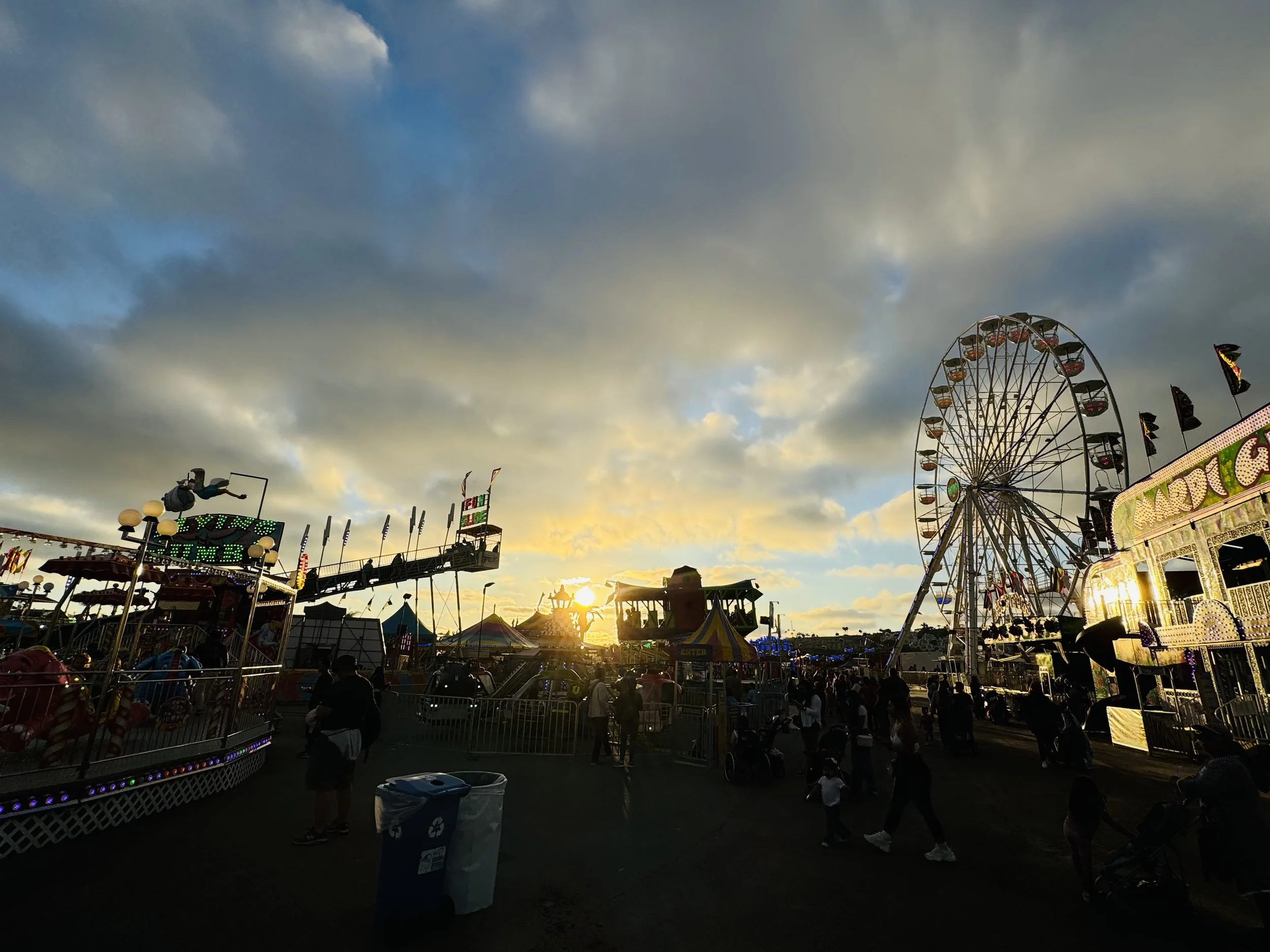
June 7th stands out in my mind for some reason. I’m not sure if that was the last day of school or the day that my friends and I had gone to the carnival. Carnivals and fairs are a trigger, not necessarily in a bad way, but in a way that reminds me of the innocence that existed before my trauma. They remind me of a time when life still felt simple and safe.
I was unaware of the danger that was looming in the days ahead, unaware of the betrayal that would occur by someone my mom and I knew and trusted. That betrayal would almost cost me my life, and it is something that will stay with me forever. It is the reason why I have trust issues and why it takes me a while to bounce back if someone I trust does something to hurt me. When trust is broken, it often feels bigger than the moment itself because it echoes something I experienced long ago.
I used to fear June 18th. As a teen, it was much worse, and unfortunately, I carried this fear into adulthood. My depression and anxiety would worsen around this time of year. I would request the 18th and 19th off from work, stay indoors, refrain from driving or traveling, and have severe catastrophic thoughts about terrible things happening to myself or my loved ones. I had already lost a beloved cousin that morning. Years later, I would discover that another relative had been murdered that day.
I felt protected if I stayed at home or in my room, not realizing how irrational that was because I was in the comfort of our home the night that I was abducted. Trauma has a way of convincing us that we can somehow prevent the past from repeating itself if we are careful enough.
Eventually, I would learn how to cope.
I found ways to ground myself, and eventually these dates began to take on a different meaning. Instead of a day of fear, June 19th would become my Freedom Day because that was the day I escaped. Rather than focusing solely on what happened to me, I began focusing on the fact that I survived.
June 21st would be the day that my mom and I could finally rest, knowing that this person had finally been captured and was in police custody. It is also the day that my story would first debut in the newspaper. I was the “14-year-old girl,” or simply “the girl,” and my mother was the woman who, at 10:48 p.m., reported that her house had been burglarized and that her daughter was missing.
When I think about that now, it is strange how quickly a person can become a headline or a news story. One moment, I was a teenager looking forward to summer vacation. The next, I was the missing girl people were reading about in the newspaper.
June is a reminder that anything can happen, and it can happen when you least expect it. People you think care about you can change in the blink of an eye. The people you think you know, perhaps you really don’t know them at all.
It is a month that changed my life forever.
However, with each passing year, I am able to celebrate the fact that I survived the unthinkable. While June will probably always carry difficult memories, it also carries reminders of resilience, survival, and freedom.
Today, even though I still struggle at times, I decided that I would go ahead and be off from the 18th through the 21st just to allow myself time to feel and decompress. I no longer see that as weakness. I see it as honoring my journey and giving myself the space I need during a significant time of year.
But today, I feel confident enough to say that I have been able to set myself free by sharing my story and helping others do the same. For years, I carried so much of this by myself. Telling my story has helped me reclaim pieces of myself that trauma tried to take away.
My name is LaDonna, and I am a survivor. I was missing and was able to escape on June 19, 1993.
Every year, June reminds me of what happened. But it also reminds me that I am still here.
The White Room: From one room to another, learning what it means to feel safe again.
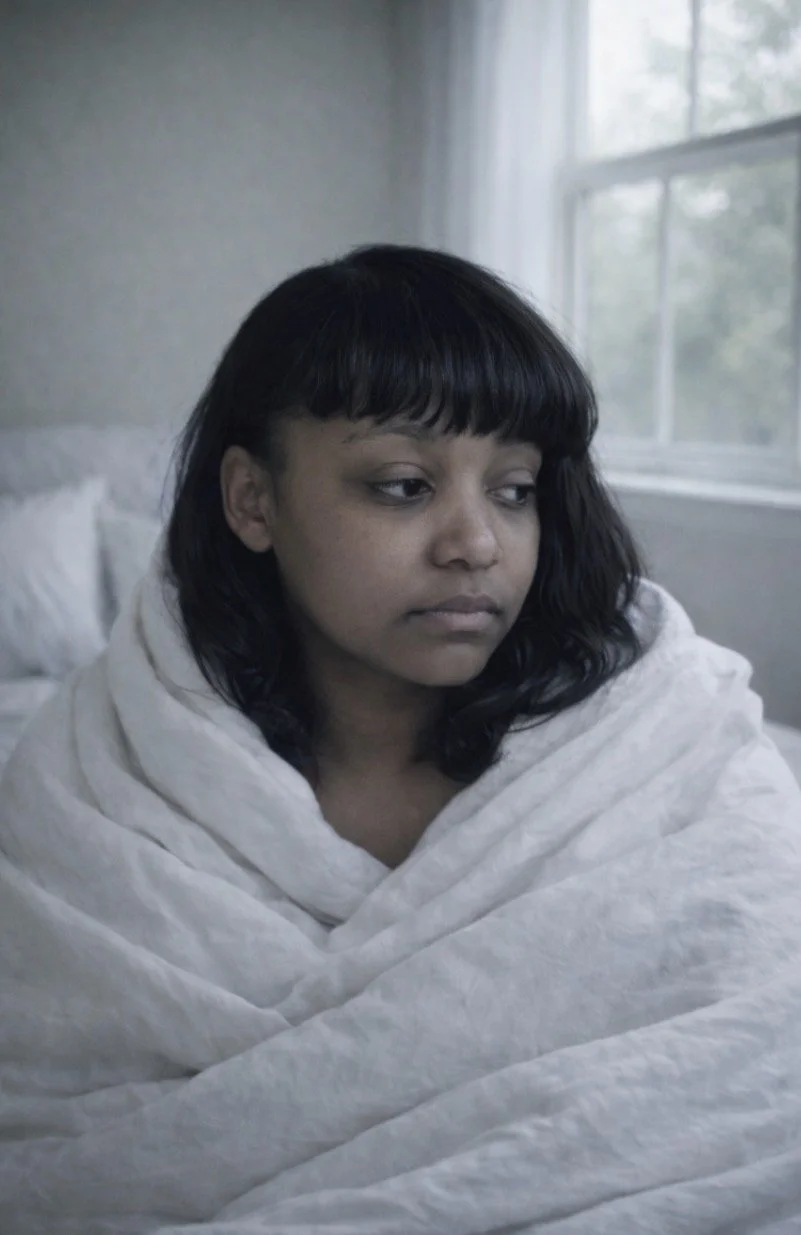
I don’t always realize why certain moments stay with me the way they do. But when I think about it now… it wasn’t just one room.
It followed me.
There’s one room I keep coming back to.
A back room in a duplex in Bear Creek.
I sat there, afraid, quiet, trying not to be seen and at the same time silently begging to be saved. With nothing but a sheet covering me. People were coming in and out, exchanging drugs for stolen goods. Adults. Grown people. And no one helped me.
I was young. I was terrified. And I didn’t know if I was going to live or die.
Once the door closed, what followed was fear, control, and violence.
By that point, there had already been strangulation. There had already been threats. There had already been enough for my body to understand that I was not safe. So I sat there, frozen in the unknown, wishing I could go home, wishing I could call my mom, wishing someone, anyone, would notice and do something.
But no one did.
And what I didn’t understand then is that I didn’t leave that room behind when I escaped.
Years later, I would find myself in more rooms. Different situations, different people, but the same feeling.
Trapped. Powerless. Being verbally attacked and belittled. And my body remembered before my mind could even process what was happening.
That’s the thing about trauma. It doesn’t always show up as a memory. Sometimes it shows up as a feeling.
A tightening in your chest. A fear you can’t explain. A silence when you want to speak.
It shows up in moments where you should feel safe, but don’t.
I’ve had more than one experience where a man has made me feel trapped. And each time, it connects back to that original moment. That room. That fear of the unknown. That feeling of no one helping.
And even when I’ve found the courage to speak up, to say, “This is triggering for me,” it hasn’t always mattered in the moment.
Because the truth is, when you’ve been in a situation where speaking up didn’t feel safe, your body learns that lesson. It carries it into relationships. Into workplaces. Into leadership spaces.
You hesitate. You question yourself. You wonder if it’s safe to say, I need help.
For me, psychological safety isn’t a concept. It’s something my body still has to figure out.
And that doesn’t just show up in how I respond to people.
It shows up in how I move through life.
There were moments during the kidnapping when I had opportunities to run. Opportunities to yell that I was in danger. Opportunities to get out.
I remember being in a car, not knowing where we were going, and thinking, should I jump out of this moving vehicle?
But I didn’t.
Because what if I got hurt. What if I got ran over. What if he caught me.
And even when we were on foot, I had those same thoughts. Should I run?
But I didn’t.
Because what if I fell. What if that decision cost me my life.
So I stayed.
Not because I didn’t want to live. But because I didn’t know what the outcome would be.
And that feeling did not stay there.
It followed me into adulthood.
Only now it sounds like,
What if I fail. What if I try and it doesn’t work.
And instead of running, I hesitate.
Instead of asking for help, I wait. Sometimes hoping someone will notice. Sometimes hoping someone will step in.
But a lot of times, no one does.
And that’s where it gets hard.
Because I’ve built things. I’ve taken risks. I wrote a book. I started a nonprofit.
I’ve done the things I once dreamed about.
But behind those accomplishments has been a constant battle with self-doubt. With procrastination. With a lack of confidence that I now understand didn’t come from nowhere.
It came from learning, at a very young age, that the wrong move could cost you everything.
So you learn to pause. You learn to second guess. You learn to stay still.
Even when movement could change your life.
Because somewhere deep down, that younger version of me is still sitting in that room, waiting, hoping someone will help, but not fully believing it’s safe to ask.
What’s even more powerful to me now is realizing how my story found its way out, even when I didn’t fully understand it.
When the Pieces Came Together
In my book, I wrote about a white room.
At the time, I didn’t connect it. I didn’t realize that the room I created was rooted in the room I was once trapped in. But looking back now, the symbolism is undeniable. My mind found a way to process what my voice wasn’t ready to say.
And then there was my escape.
Even now, it feels surreal.
The moment his grip loosened. The strength that came over me. The decision to run.
I ran through a living room full of adults who didn’t stop me. The front door was open. The screen door was unlocked. The sun was shining.
No one outside. No one stopping me in that moment.
And then her.
Donna.
The only person who stopped. The only person who saw me and chose to act. The only one who helped.
Everything aligned in a way that I can only describe as divine.
Even learning later that he had been behind me at some point only deepens my gratitude. Because despite everything that could have gone wrong, something went right.
And I made it home.
There are people who will help - Family, coworkers, leaders, organizations, hospitals.
And there are moments where we have to become our own voice, even when it feels unfamiliar, even when it feels unsafe.
I’m still learning what it means to feel safe, and still choosing not to stay silent.
Today, I’m still learning how to move, even when fear tells me to stay still. Still learning that my voice matters, even when part of me wants to stay quiet. Still learning that asking for help is not weakness.
Fear may still speak… but I’m working toward not letting it silence me. That silence may feel familiar, but I know it is not a place where I have to stay.
And even though I still freeze sometimes, every time I choose to speak or move forward… I take a little bit of my power back.
Because the truth is, past trauma doesn’t just stay in the past. It shows up in how we respond, how we communicate, how we lead, and how we show up for others.
And for those in positions of leadership, it’s a reminder that how we speak, how we listen, and how we create space for others truly matters.
Because you never know what room someone is remembering while they’re standing in front of you.
And to those who have their own “white rooms”… I pray you find the strength to feel safe again.
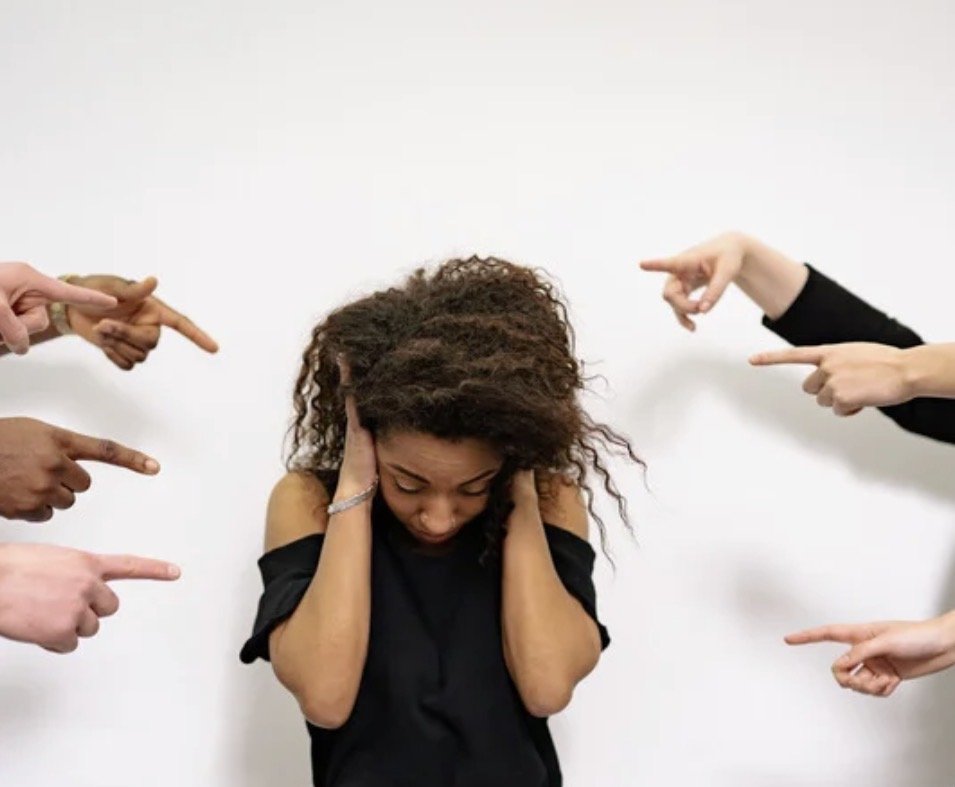
Use Your Voice… Even When It Feels Unheard
There’s a heaviness that comes with using your voice and then realizing it didn’t change the outcome you hoped for.
That weight doesn’t always show up right away. Sometimes it comes later, when decisions are made that don’t reflect what was shared, when harm feels unaddressed, or when the very behaviors that were spoken up about seem to circle back again. It can leave you questioning not just the situation, but the value of speaking up at all.
And yet, using your voice still matters.
In many workplaces, there is growing awareness around trauma-informed leadership. There are trainings, conversations, initiatives. Those are important steps. But the reality is, trauma doesn’t live in a checklist. It lives in the body. It lives in memory. It shows up in ways that aren’t always visible or easily understood.
Tone matters.
Body language matters.
How feedback is delivered matters.
A raised voice, a dismissive comment, a clenched jaw, or being spoken down to in a closed room, these moments may seem small or routine to some, but for someone who has experienced trauma, they can feel overwhelming, even unsafe. The response isn’t always logical or linear. It can look like shutting down, over-accommodating, freezing, or trying to keep the peace at all costs.
That’s not a lack of professionalism.
That’s a nervous system responding to something it recognizes.
This is where leadership has an opportunity, and a responsibility, to go deeper.
Because trauma-informed leadership isn’t just about awareness. It’s about how leaders show up in real moments. It’s about creating environments where people don’t feel diminished, cornered, or dismissed. It’s about leading with consistency, emotional regulation, and respect, especially in moments of stress.
It’s also about what happens after someone speaks up.
There are times when people advocate for themselves or others, and still don’t see immediate change. There are situations where accountability feels delayed, incomplete, or absent altogether. That can be incredibly discouraging. It can feel like effort was wasted, like courage didn’t lead to anything meaningful.
But using your voice was not wasted.
Even when outcomes don’t align right away, speaking up creates awareness. It disrupts silence. It plants seeds that may take time to grow. And sometimes, the impact of using your voice isn’t fully visible in the moment, but that doesn’t mean it isn’t there.
For me, there is a sense of closure.
My perpetrator, the individual who kidnapped and assaulted me, went to prison and did not make it out alive. There is a level of peace in knowing there can be no further harm from that person. While that does not erase what happened, it creates space to move forward without the weight of wondering if it could happen again.
But that’s not everyone’s story.
There are women still navigating domestic violence situations, where speaking up doesn’t immediately lead to safety.
There are individuals in the workplace who have experienced bullying or intimidation, only to watch those same behaviors go unaddressed, or even rewarded.
There are survivors who report, disclose, and advocate, and still find themselves in environments where accountability feels inconsistent or absent.
There are those within families and communities where harm is minimized, dismissed, or quietly carried without acknowledgment.
And that reality can be incredibly difficult to reconcile.
So this is the moment to reflect.
There are moments when I question whether I want to continue this work. Moments when I feel discouraged, when things don’t move the way I hoped, or when the impact isn’t always visible. But I know this work matters.
That’s also why I’m committed to continuing to find ways to recognize and uplift survivors, including those who have experienced bullying, whether in school, at work, or in everyday life. Not every form of harm is acknowledged in the same way, but that doesn’t make it any less real.
Even when outcomes don’t look the way we hoped, we keep going.
Even when our voice doesn’t feel heard, we keep using it.
Even when it feels like nothing changed, we trust that something did.
This takes mental fortitude.
The kind that isn’t loud, but steady.
The kind that chooses to press forward anyway.
Let’s continue the work.
Why Survivors Keep Their Stories to Themselves
Opening the door almost cost me my life, but I know it was not my fault.
Oh, we all love true crime, right? At least I know I do.
I was scrolling through reels the other day when I came across a story about a teenage girl who opened the door for a man claiming he wanted to buy a house. He was shirtless, asking questions, and she trying, to be polite, told him her parents were out of town. He eventually left, and she went to pick up pizza for her siblings.
But when she returned home, everything had changed.
The man had somehow entered the house while she was gone and had tied up the two younger children inside. Moments later, the teenager herself was kidnapped.
As someone who was also kidnapped, I was curious to see what people were saying in the comments. What I found was disappointing but not surprising:
People were calling her “stupid.”
People were blaming the parents for leaving the kids at home.
People were blaming her for answering the door and then leaving to pick up pizza.
And there was even a comment saying that “in Black households, parents teach you not to answer the door,” as if that alone prevents violent crime.
And I want to pause here, because I grew up in a Black household. And my mother did teach me better. She told us never to open the door for anyone; not friends, not family, certainly not strangers. I was rarely ever home alone because she hated the thought of leaving me without supervision. I spent so much time at my grandmother’s house because of how protective my mom was.
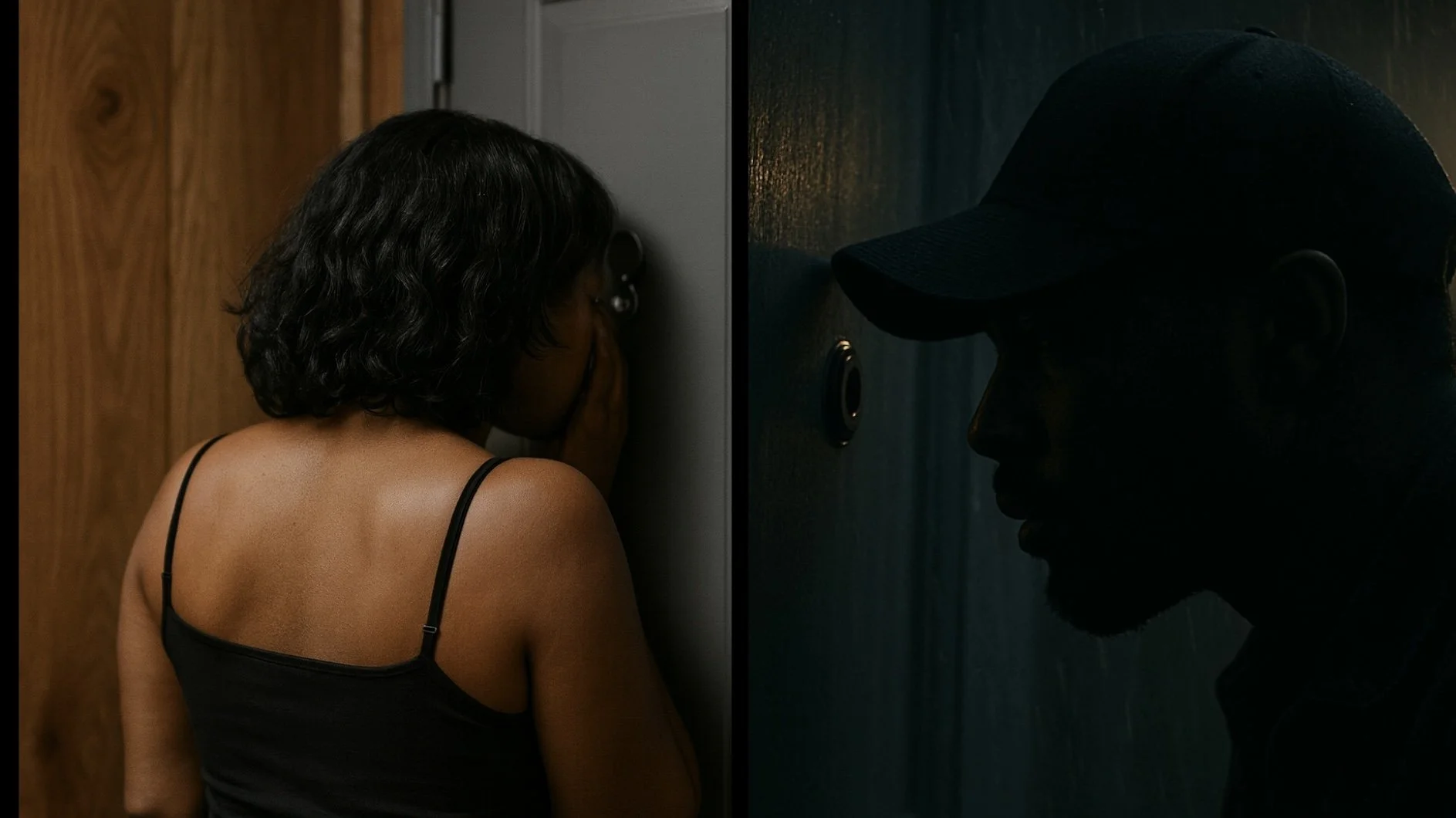
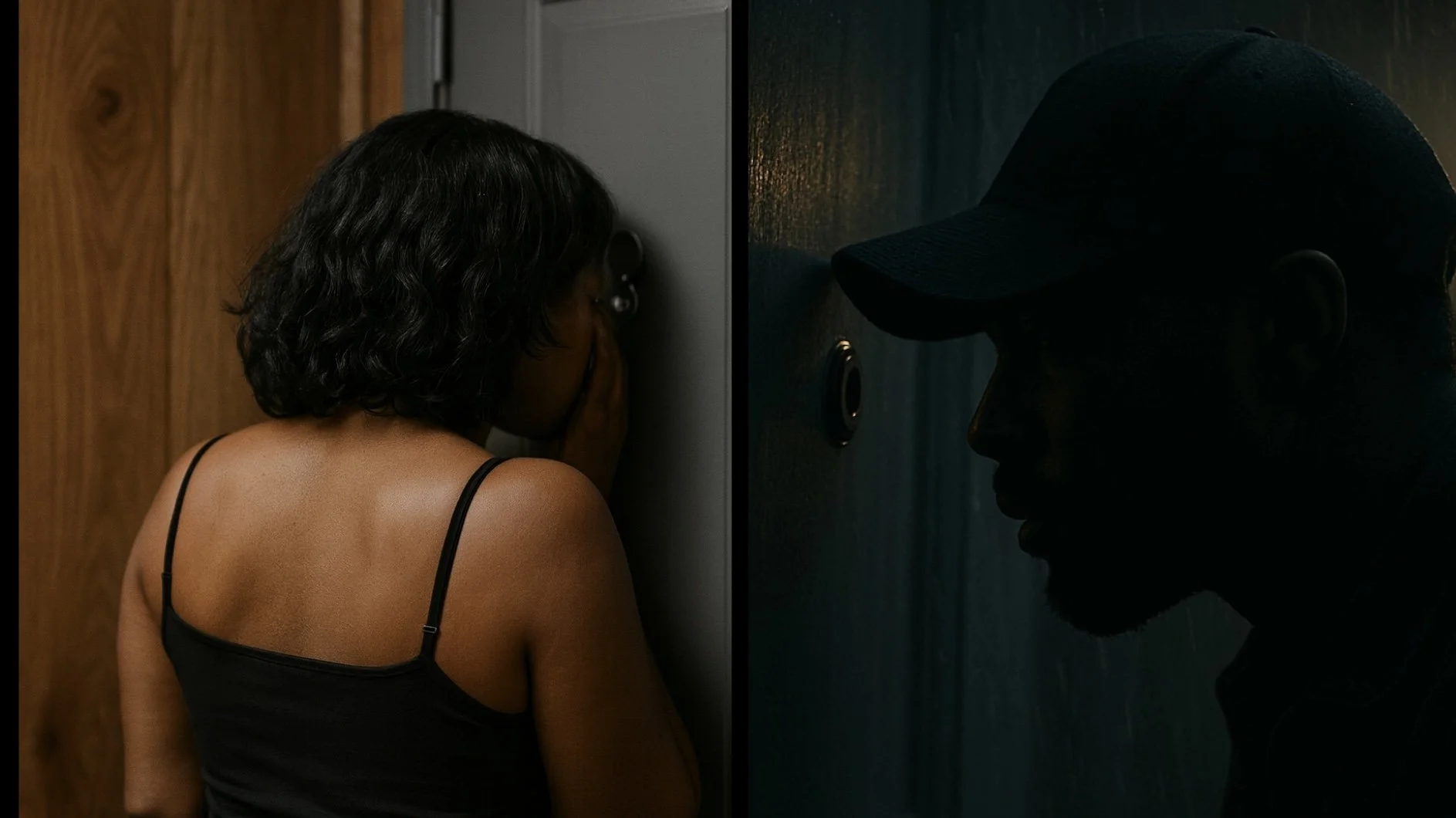
But one evening, when I was 14, I asked to stay home while she and my aunt went to the grocery store. I heard a knock, looked through the peephole, could not see who the person was, and I opened the door.
Yes. It was a mistake.
Yes. I blamed myself for years.
Yes. I carried deep shame for not listening, for making a choice that nearly cost me my life.
But here is the truth:
It was not my fault.
It wasn’t my mother’s fault for leaving me at home.
It wasn’t my aunt’s fault for introducing him to our family.
It wasn’t my fault for opening the door.
And beyond my own story, this is something every survivor needs to hear:
It is never the victim’s fault.
Not for what they were wearing.
Not for being polite.
Not for trusting someone they knew.
Not for walking alone.
Not for drinking.
Not for freezing up.
Not for fighting back.
Not for not fighting back.
Not for being a child.
Not for being vulnerable.
Not for making a mistake.
Not for wanting to help someone.
Not for being in the “wrong” place at the “wrong” time.
Not for answering the door.
Not for going to get pizza.
Not for going home.
Not for existing.
Violent crimes happen because someone chooses violence, not because of anything the victim did or did not do.
No outfit, no action, no personality trait, no place, no moment in time gives anyone the right to commit sexual violence. The person who chooses to harm is the only one responsible.
This is why victim-blaming is so damaging.
This is why survivors hesitate to disclose.
Because the world often focuses on what we did wrong instead of the person who chose violence.
No one should have to defend their choices as a child, a teenager, or an adult in order to be treated with compassion. The clothes we wear, the people we trust, the politeness we show, or the mistakes we make do not cause violent crimes.
So I share this for anyone who has ever kept their story quiet because they feared judgment, ridicule, or blame:
You are not at fault. You did what you needed to survive.
And sometimes, we keep our stories to ourselves because the comment section, both online and in real life, can be far more brutal than the truth we’re trying to speak.
Speaking Your Truth: Sharing Your Story for the First Time
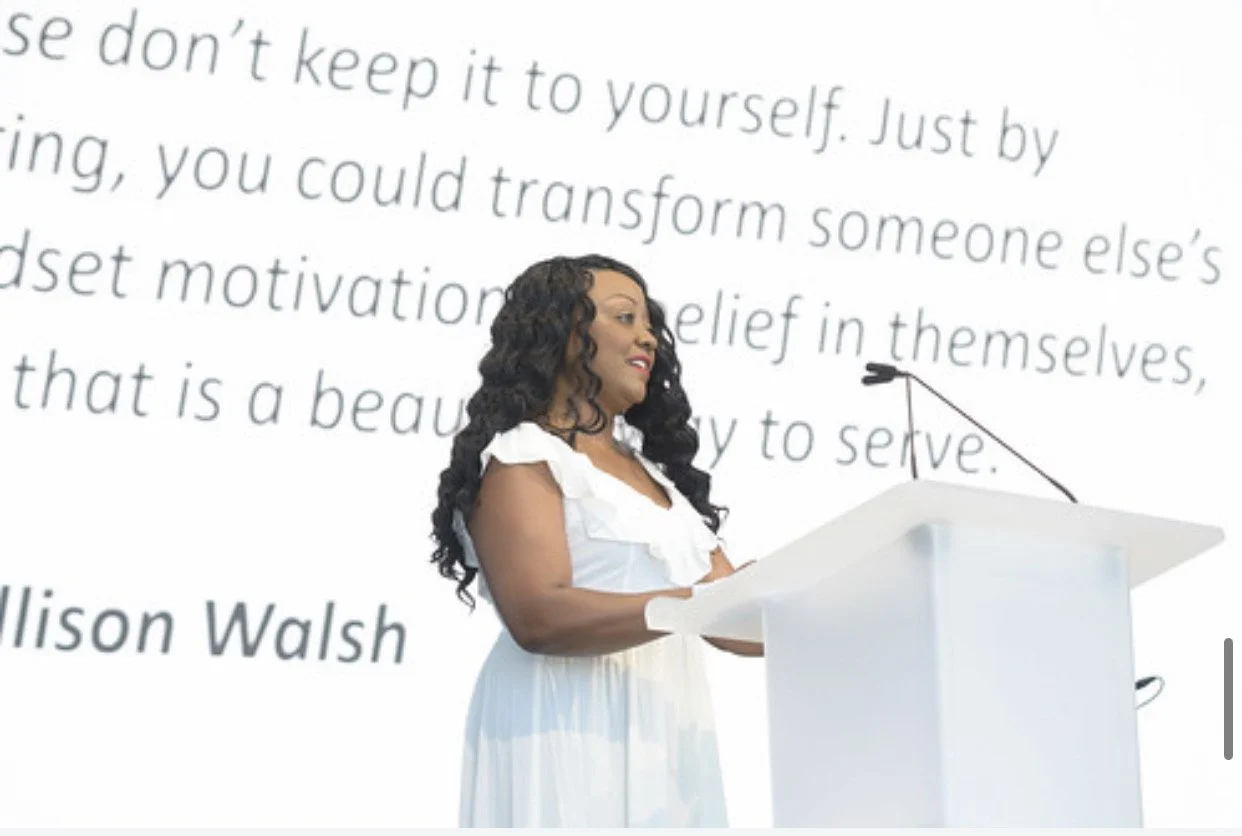
The first time I was asked to speak publicly about my story, it was intimidating. I remember sitting there thinking, “Who would even want to hear this? What if I don’t have the right words? What if I’m still too broken?”
Someone had once planted that very seed of doubt in me: that no one would want to hear from me if I was still struggling, still depressed, or hadn’t “done enough” positive things with my life yet. And for a while, I believed that.
But here’s the truth: sharing your story isn’t about having it all figured out. It isn’t about proving that you’ve transformed your pain into some shining success. It’s about connection. It’s about letting others know they are not alone.
You Don’t Have to Tell Everything
When I first started speaking, I thought sharing my story meant I had to relive every detail of what happened. But I quickly learned that you don’t have to. You get to choose what to share.
There are different ways to tell your story:
You might highlight the lessons you’ve learned.
You might focus on the support systems that helped you.
You might share only part of your journey.
And most of the time, you don’t even have the time to tell every detail anyway. What matters most is that your voice is heard, not that you fit it all into one talk.
Where I’ve Shared My Story
Over the years, I’ve had the opportunity to speak in many different spaces:
Crisis Intervention Trainings – where volunteers prepare to become Sexual Assault Response Team Advocates.
San Diego Regional Police Academy – where I’ve spoken to police recruits and cadets, particularly those preparing to work in the Sex Crimes Unit.
College Campuses – like San Diego State University, where student organizations spread awareness and provide support systems for survivors.
Fundraisers and Community Events – for organizations that have been crucial to my own healing.
Each audience has been different, but every time, I walk away reminded of how powerful it is to share.
The Power of Support
Yes, speaking up can feel intimidating at first. But the amount of support that comes back to you—it’s incredible.
As survivors, we often feel isolated, like no one could possibly understand. But when you share your truth, someone in the crowd will nod. Someone will exhale in relief. Someone will think, “Finally, someone said it. I’m not alone.”
And sometimes, that someone might even take the next step toward getting help because of your words.
A Final Thought
Your story matters. You don’t need to wait until you’ve reached some perfect “healed” version of yourself to share it. You don’t need to tell every detail. You don’t need to have a polished ending.
You only need to speak from the heart.
Because when you do, you remind others—and yourself—that healing is possible, even in the middle of the journey.
One More Thing I’ve Learned
I’m not a professional speaker. Most of the time, I speak casually, from the heart. The only exception has been fundraisers, where organizations usually guide me on what areas to cover or ask me to keep certain things in mind.
That’s another important piece: preparing your story depends on where you’re speaking and who you’re speaking to.
Looking ahead, I do hope to expand into more formal, paid speaking opportunities—maybe even a TEDx talk or an interview. Those are dreams I hold close. But for now, what matters most is this: whenever you are ready to share your story, there are people who are ready to listen.
And if sharing my story gives even one person the courage to step forward with theirs, then it has all been worth it.
How Center for Community Solutions Changed My Life
I am in awe of the bravery of all the women speaking out against sexual violence. For me, I held on to my experience for so long that eventually, out of desperation and a need to heal, I decided to reach out to an organization to volunteer. My goal was to become a member of the Sexual Assault Response Team.
Not long after, I received a response from someone named Ma’at Cook, and they invited me in for an interview. I remember arriving at the center— nervous, unsure, but hopeful. I was buzzed in, greeted with a warm smile, and then I remember a staircase. We walked up that staircase together, and that’s where my interview took place.
During the interview, I was asked a little about myself and then why I wanted to volunteer. That was the moment I shared part of my story with Ma’at. Afterward, I began the training, but I struggled to complete it. I felt frustrated, because I knew deep down this was something I needed to do. So I finally asked, “What else can I do for you?” And that’s when the opportunity came to share my story during crisis intervention training.
At that time, being shy and socially awkward, I couldn’t imagine standing in front of a room and telling people that I had been kidnapped and assaulted. I had been told before that no one would want to hear my story because I was still depressed, anxious, and hadn’t “done anything positive with it.” But then I heard a guest speaker share her own story during one of the trainings, and I thought, how brave. If she could stand up there and speak her truth, maybe I could too.
So I tried. And the response was incredibly supportive. People said things like, “Thank you for sharing,” “You’re so brave,” and “I’m so sorry that happened to you.” They asked thoughtful questions that eventually helped me process the magnitude of what I had experienced. For the first time, I didn’t feel alone. I felt understood. I learned that it is okay to talk about trauma—that there are people who won’t judge you, who will listen, who will support you, and who will walk with you through your healing.
And when I say “all survivors matter,” I say it with compassion. Sexual violence takes many forms, and each survivor’s experience is unique. My heart is simply that no survivor ever feels dismissed, overlooked, or unworthy of support.
I also learned the importance of receiving a response. I’ve reached out to organizations in the past and heard nothing back, and that can make you feel invisible or unworthy. And although I understand that larger organizations can’t always respond to everyone, I truly believe every survivor deserves some acknowledgment. Our experiences matter—no matter the details, the severity, or the comparisons we sometimes make, like “mine wasn’t as bad.” All stories matter.
That’s what I found with Center for Community Solutions. My volunteer experiences there have been incredible. The relationships I’ve built over the years have shaped who I am today. And it all started with people like Ma’at Cook, Liat Wexler, Corinne Sylvester, Maria Oucalt-Smith, and so many others. I could list names all day—you know who you are, and I appreciate every one of you.
Please continue the work. No matter who comes and goes, I will always be a supporter of the organization that helped me free myself from the pain I carried for so long after experiencing sexual violence and kidnapping.
I love you and thank you!
If you or someone you know needs support, Center for Community Solutions can be reached at 1-888-385-4657 or at www.ccssd.org.

Why Trauma-Informed Leadership Matters
Leadership is not just about driving results—it’s about caring for people. Every word, every action, and every decision we make as leaders impacts the people who work under our care. And sometimes, without even realizing it, our words and behaviors can re-traumatize others and break their spirit.
It’s easy for someone to say, “Well, whose fault is it that this person is broken?” The truth is, it may not be your fault—but it is your responsibility to ensure that you’re not the cause of further harm. When people are already carrying past trauma, careless or toxic leadership behaviors can create new wounds and leave them with even more to heal from.
This isn’t just theory for me—it’s personal. As a survivor of kidnapping and sexual violence, I know how trauma can shape someone’s life. More recently, I also experienced workplace bullying that disrupted my life for an entire year. I’m not ready to share the details yet, but I can say it shook my confidence as a leader, a mother, and a friend. It was difficult to speak up because I was afraid of being further targeted. Even though I did have some supportive voices around me, the damage was done. I am still working to rebuild the level of happiness I once had before it all began.
What I don’t want is for anyone else to experience what I have experienced. Sadly, throughout my career, I have witnessed toxic leadership behaviors—slamming doors, throwing papers, yelling, ridiculing, belittling, controlling how I interacted with others. These actions may seem small to some, but they chip away at a person’s dignity, confidence, and sense of safety. They can re-traumatize people who are already fighting invisible battles.
This is why I’ve decided to pursue certification in Trauma-Informed Leadership through the Workplace Peace Institute. I want to learn more, grow more, and lead better. I believe every leader should receive some form of training in trauma-informed leadership, mental health, and even psychology. Without it, we risk unintentionally causing more harm to the very people we’re meant to guide and support.
We also have to remember that trauma shows up in different ways—through responses like freeze, fight, flight, fawn, and even flop. When someone feels threatened or backed into a corner, it becomes almost impossible for them to think clearly or make good decisions. Recognizing these responses allows us to respond with compassion instead of criticism, helping people get back on track without stripping them of their dignity.
Yes, leaders are responsible for results. But we can’t drive performance without trust. And trust only exists when people feel safe—psychologically, emotionally, and professionally. If employees shut down because they don’t feel safe, we all lose.
That’s why trauma-informed leadership is so important. It’s about asking: How can I help? What does this person need to thrive? It’s about leading in a way that strengthens people rather than breaks them down.
My hope is that more organizations embrace this mindset and make trauma-informed training a standard for leadership. Because when we lead with empathy, awareness, and accountability, we don’t just build better teams—we build stronger, healthier people.
⸻
Call to Action
If you are a leader, I encourage you to take time to learn about trauma-informed leadership. Reflect on your words, your tone, and your behaviors. Ask yourself: Am I creating a space where people feel safe, supported, and able to thrive?
And if you’re an organization, consider making trauma-informed leadership training part of your leadership development programs. It’s not just an investment in your people—it’s an investment in the long-term success and health of your workplace culture.
⸻
Resources to Explore
• Workplace Peace Institute – Trauma-Informed Leadership Certification (https://www.workplacepeaceinstitute.com/)
• SAMHSA (Substance Abuse and Mental Health Services Administration) – Trauma-Informed Care in Behavioral Health Services (https://store.samhsa.gov/product/TIP-57-Trauma-Informed-Care-in-Behavioral-Health-Services/SMA14-4816)
• National Center for PTSD – Understanding Trauma Responses (https://www.ptsd.va.gov/)
• Harvard Business Review – What Managers Need to Know About Trauma-Informed Leadership (https://hbr.org/)
• Center for Creative Leadership – Psychological Safety in the Workplace (https://www.ccl.org/)

Pieces of Me: Healing After the Unimaginable

32 years later….a survivor’s reflection.
When survivors share their stories or testimonies, we often begin by painting a picture of how the day started.
“It was a beautiful, sunny day…”
“I had just spent the afternoon with friends at the park…”
“I remember the breeze at the beach…”
Those moments before trauma hits—so vivid, so normal—stay with us. They’re the last fragments of life as we knew it. But the day my life changed wasn’t ordinary. It began with grief.
Early that morning, my mom got a heartbreaking phone call—our cousin’s daughter had passed away. The stillness in the room after she hung up the phone felt heavy, thick with sorrow. We spent the day at our cousin’s house, mourning the tragic loss, surrounded by pain and disbelief. I sat quietly, watching my mom comfort our cousin, her arms wrapped tightly around her as if trying to hold her together. The sadness in the air clung to us all, like a fog.
Something about that day felt off. At the time, I chalked it up to the grief—to the shock and weight of death. But now, looking back, it feels like something deeper was stirring. A shadow that hadn’t yet shown itself.
By the time we got home, I was emotionally exhausted. But more than anything, I just wanted a little space—to be alone in the comfort of something familiar. I was 14, and all I wanted to do that night was relax, wait for a phone call from a friend, and watch a movie I had been excited to see, and had seen many times: Drop Dead Fred. I even planned to record it.
When I asked if I could stay home instead of going to the store with my mom and aunt, I didn’t expect her to say yes. But, reluctantly, she did.
So I stayed behind. Not to sleep or curl under the covers, but to enjoy a quiet moment, the kind only a teenager would think of as peaceful and simple—TV, a phone call, and some time alone.
Outside, the rain had begun to fall—a soft, misty drizzle that made the night feel eerily quiet. I didn’t know then that my sense of calm would soon be shattered. I didn’t know that night would change everything.
Little did we know that as our day began in mourning, another tragedy was already unfolding. One that hadn’t yet revealed itself.
My mother would soon become the mother of a missing child.
And I—a 14-year-old girl waiting on a phone call, a movie, and a moment of peace—would become the victim of multiple crimes. My life, my safety, my future—suddenly hanging in the balance.
Will I live?
Will I survive this?
Or will I die?
Will my mom be left with only questions and unbearable silence, forced to wonder where I am, what happened to me, if I’ll ever come home?
The fear of the unknown was no longer just a feeling. It was real. It was alive. And it was closing in.
Perhaps what has stuck with me the most over the past 32 years—as today marks the anniversary of when I was kidnapped—is the way life can change in an instant. You begin your day just like any other day… and then, all of a sudden, an unexpected tragedy strikes.
You’re left stuck in disbelief, asking yourself: How did I get here? What led to this?
And a piece of you dies.
From that moment on, you spend the rest of your life trying to heal, trying to recover. It’s hard for people to understand what that really means—that one day, I was just a normal 14-year-old kid. I had just finished 8th grade. I just wanted to watch TV and wait for a phone call from a friend.
And then suddenly, I was fighting for my life.
Every single day that I wake up, I feel that same unease. The whole day feels suspect. I wonder, what trauma will I have to survive today? Because back then, I never saw it coming. And yet, it happened.
I know that this is life—and life is full of ups and downs. But knowing that doesn’t make it any less terrifying. It’s a scary thought to live with, that something so life-altering can happen without warning… and that it did.
I’ve been asked many times:
What do you get out of sharing your story?
What have you gained by asking questions about the offender?
Why do you want to reach out to certain people who were there that night?
And what I can say is—sharing my story has helped me put pieces of the puzzle together in ways I never expected.
I’ve learned more about the man who hurt me. I came to understand that he wasn’t just someone who made a mistake—he was someone who needed to be put away.
I’ve also had the chance to reconnect with Donna—the only person who helped me that night. I was able to look her in the eyes and say thank you. That alone was a healing moment I didn’t know I needed.
Sharing my story has helped me accept what happened to me. I no longer carry the blame for opening the door, or for being too scared to run, or for freezing when I wanted to scream. I’ve come to understand those are all normal, human responses to trauma. I was a child—just 14—and none of what happened was my fault.
And maybe the most meaningful part of all: I’ve seen how sharing my truth has helped others find theirs. I’ve watched people get help, speak up, and begin their own journeys toward healing.
Over the years, every time I’ve shared my story, I’ve experienced some form of growth. Whether it’s through my volunteer work, the recognition I’ve received, or the birth of my nonprofit—I’ve taken steps forward. Year after year, I’ve reclaimed pieces of myself.
In many ways, I’ve rewritten the narrative.
Not of what happened to me, but of what I’ve done with what happened to me.
⸻
What happened to me doesn’t define who I am—but it is a major part of who I’ve become.
And while that night will always live within me, I can now say, with 100% certainty, that I am more than just another victim of sexual violence. I am more than my trauma.
I am a mother.
A leader.
An advocate.
A survivor.
A truth-teller.
A light for others still finding their way through the dark.
This anniversary is not just a reminder of the pain that I endured—it’s a reflection of how far I’ve come. It’s a reflection of purpose, resilience and growth. I have turned pain into purpose, silence into advocacy, and survival into a mission of service and healing.
There are still hard days. The fear and the questions don’t always disappear. But I wake up each day and choose to keep going—not just for me, but for the ones who haven’t found their voice yet.
To anyone reading this who carries their own hidden wounds: your story matters. Your healing matters. And you are not alone.
This is what 32 years of surviving, learning, and rising looks like.
And I’m still standing.
The Importance of Sharing Survivor Stories & Experiences
What I hope people see when I share my story is not someone seeking pity, but rather someone who started this journey without knowing where it would lead. Despite the challenges and hurdles along the way, it’s possible to grow and make a difference—not because every traumatic experience has a silver lining, but because in my case, I’ve been able to find strength and purpose through it.
Sharing has helped me connect with others—whether through volunteering or leadership—and that’s what I want to encourage. I don’t share to invite sympathy; I share so someone who is struggling can see that if I can keep going, it is possible that they can too. More importantly, I want that person to reach out for help—whether it’s from me, a trusted friend or family member, or a supportive organization—and decide to begin their own journey toward healing.

What I Wish I Had Done Sooner: A Survivor’s Journey to Healing
“In June 1993, I was kidnapped and sexually assaulted by someone we believed to be a family friend. Afterward, I returned to school as if nothing had happened, with little support and without therapy. Thrust into the 9th grade, I was left to bear the weight of this traumatic experience alone.”
As a survivor of teen assault, there are three key things I wish I had done sooner in my healing journey. First, I wish I had found a skilled therapist, psychologist, or psychiatrist to help me process the trauma, and guide me through the emotional aftermath. Second, I wish I had sought out a support group where I could connect with others who understood my experience and could offer a sense of community. Lastly, I wish I had discovered an organization that could provide access to additional resources to support my recovery and overall well-being.
Over the past 31 years, I’ve learned that any one of these steps could have significantly expedited my healing process. When I connected with Center for Community Solutions (CCS) in 2009, I realized that finding the right support system is one of the most critical factors in fully healing. The right resources, connections, and community can make all the difference on the journey to recovery.
Even though I had the support of family and friends back then, my mental health continued to suffer. I lost my creativity and withdrew, spending much of my time in my room reading but not engaging in anything that truly supported my healing from the trauma. I didn’t have the tools or resources needed to address the deeper emotional scars.
I’ve always shied away from therapy and never put much effort into it. I didn’t find it helpful when it felt like my emotions were just being validated without addressing the root of the problem. But now, I feel like I’ve finally found the right support. I’m no longer ashamed to speak about how important it is to have good mental health providers.
At 14, if I had found a support group where I could talk with other teen survivors, it would have made a huge impact in helping me process my emotions. Instead, I felt the need to isolate and keep my story hidden out of fear that I wouldn’t be understood, or that my story would scare people away, or worse, that no one would believe me because of everything that happened during the time I was missing. Being believed is a vital first step for any survivor, and the fear of not being believed can cause you to shut down completely. Holding onto something so heavy can do a lot of harm, which is why I’m grateful that I’m able to speak about my experience freely today. I know now that I am not alone, and that there are others out there like me.
Finding a supportive organization was a true game-changer. Initially, I only wanted to volunteer for CCS as a member of the Sexual Assault Response Team (SART) because of the impact my victim advocate, Ruby Marsden, had on me after my kidnapping. Ruby was so helpful and nurturing, and I always dreamed of being that person for someone else one day. It took a long time for me to get there, but in 2022, I finally achieved that goal. This year, I’ve had the opportunity to volunteer for SART, and it was a challenging but rewarding experience.
CCS has also given me a platform to speak freely about my survivor story during crisis intervention trainings. Since then, I’ve been able to share my experience at various locations around San Diego, and it has been one of the most rewarding things I’ve ever done.
Looking back, I wish my mother and I had explored other organizations, such as the National Center for Missing and Exploited Children (NCMEC). I know they have more resources now than they did back then, but healing from sexual trauma is different from healing from abduction. There are two parts to my story, and I’m still addressing both. Having my life threatened and being taken from my home and loved ones, and facing the constant uncertainty of whether or not I would survive from one moment to the next, was terrifying. I believe that if my mother and I had connected with an organization that specifically supported missing children and their families, it would have helped in ways we weren’t able to address at the time.
The feelings I struggled to deal with after the abduction included the shock of being caught off guard, not expecting someone to react violently. The transition from feeling safe and unaware to suddenly facing the possibility of dying has haunted me for years. I often grappled with the belief that I had disobeyed and somehow deserved what happened because I didn’t listen. No one made me feel that way, yet that thought constantly lingered in my mind: If I had just listened to my mom and not opened the door, maybe this wouldn’t have happened.
Being away from home and my loved ones filled me with uncertainty. Bystanders were watching from the sidelines, doing nothing to help—no one called the police or tried to bring me back to safety. I constantly questioned my survival: What if I fall? What if he catches me? What if? The urge to escape was strong, yet fear held me back. I wondered what would happen if my attempt to flee failed. When was it safe to escape? Should I comply and hope for the best? These questions haunted me, leaving me in a constant state of anxiety and second-guessing myself.
At the time, I didn’t know much about sex trafficking, but my kidnapper had threatened to take me to St. Louis, Missouri, and sell me to men. There were many horrifying things I was told that I’m grateful never happened. I’m incredibly thankful to still be alive after such an experience. My hope is that by sharing my story and journey, I can help others turn their pain into purpose. I’ve been given a second chance, and I’m determined to make the most of it. This part of my journey is about peeling back the layers and getting to the root of my healing. I pray that once I do, I will be able to flourish and continue to thrive in this space. By addressing the deeper wounds, I believe I’ll be able to grow even stronger and make a greater impact.
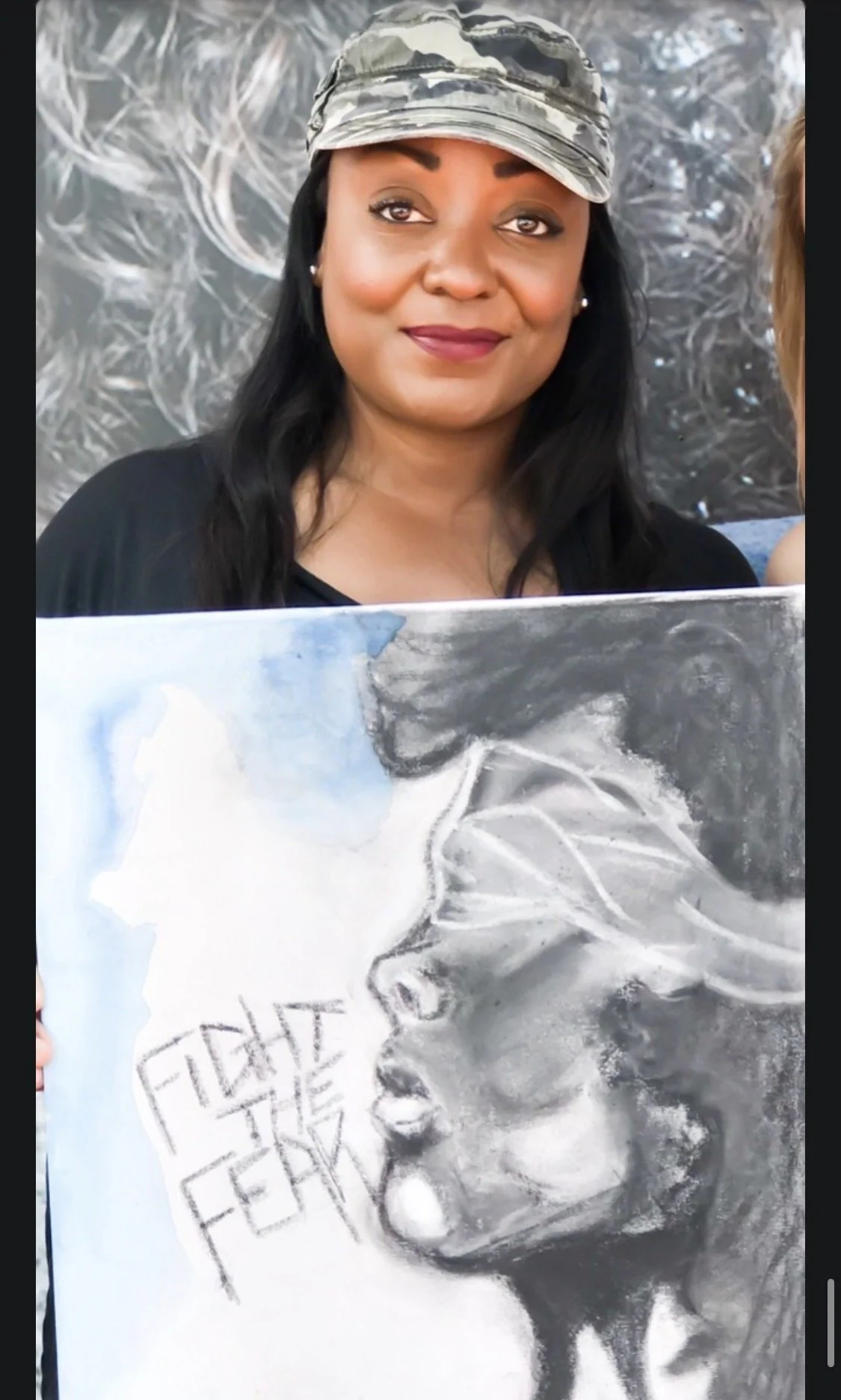
In 2018, a police cadet that I met while presenting at the San Diego Regional Police Academy gifted me with a painting that said, Fight the Fear. Ever since then, I have remembered that and I often reflect on that painting. Everything that I'm doing now is an attempt to fight the fear. The fear of not being worthy, the fear of not being good enough, the fear of having a story that's not good enough to be told or shared with the world, the feeling that nobody cares and so why even try? What I’ve learned, is that people do care about what I have to say and are willing to listen.
Launching LaDonna Renee VST Foundation, Inc., as well as the scholarship program, is helping me heal my inner child. Although it’s many years later, I am healing my 14-year-old self by becoming the person I wish I had back then. Today, I not only have access to the resources I needed, but I still have the unwavering love and support of my family and friends—perhaps even more so than before. Along this journey, I’ve met so many wonderful people who have become part of my support system. Now, I’m able to give back and share what I’ve learned, in the hope that it will help others. My goal is to be the person I needed for someone else.
2024 has brought a lot of change, and while it’s been a tough year, I’ve reconnected with a great psychologist whom I trust. I’m also working with a psychiatrist who has helped me manage my medication, and together, they make a strong team. Eventually, I want to see a trauma specialist to dig deeper into healing my inner child, as I believe it’s important to start at the root. This will be an essential part of my journey moving forward.
With LaDonna Renee VST Foundation, Inc., I have created and will continue to build a circle of supportive individuals, fostering an environment where we can not only support one another but also help other survivors in need of connection. Connection has been a critical part of my healing journey. Connecting with like-minded people who truly understand what I’ve been through and who have had similar experiences has helped me realize that I am not alone.
I am incredibly grateful to the CCS for providing me with the platform and space to share my story, which has opened many doors for me. I will always appreciate them as a supportive resource and network, as it has truly been life-changing. My hope for all my readers is that you, too, will feel inspired and encouraged to share your stories when you are ready. Gaining the confidence and courage to do so can take years, but whenever that moment comes, know that there are people who are willing to listen, support you, and help you thrive.
Healing Through Education: How Learning Can Support Survivors After Trauma
“In June 1993, I was kidnapped and sexually assaulted by someone we believed to be a family friend. Afterward, I returned to school as if nothing had happened, with little support and without therapy. Thrust into the 9th grade, I was left to bear the weight of this traumatic experience alone.”
In June 1993, I was kidnapped and assaulted by someone we believed to be a family friend. Afterward, I returned to school as if nothing had happened, with little support and minimal therapy. Thrust into the 9th grade, I was left to bear the weight of this traumatic experience alone.
I’ve always loved school and was excited and ready for the new school year to begin. I remember my guidance counselor and principal checking in on me, asking how I was doing, and offering support if I needed it. But looking back, I realize schools weren’t equipped with a trauma-informed approach back then. Though their intentions were good, I didn’t receive the level of support I truly needed. My mom and I were both deeply traumatized by the experiences we endured before the preliminary hearings. That experience made us shy away from any form of therapy, and we never looked back.
Before the kidnapping, I found joy in writing, journaling, and art, but after the trauma, I lost interest in those things. I stopped journaling altogether when my personal writings were used against me, distorting my identity into someone I wasn’t.
I walked the halls carrying a heavy story that no one really knew. A few people asked about what happened to me, but most had no clue that I was “the girl” who had been abducted from 1100 Rangeline St. I remember one person accusing me of making it up for attention.
One of my best friends recently told me that she hadn’t fully grasped what I had been through until we were adults. Then one day, I finally shared the full story with her, and she was in complete shock.
In spite of all of that, returning to school allowed me to channel my energy into learning, providing a much-needed distraction from everything I had been through.
I’ve always placed a high value on education, so I worked hard to keep my grades up. It became a positive outlet for me, a way to focus on growth and building relationships.
By my junior year, I knew that I wanted to attend the Fashion Institute of Design and Merchandising in San Diego, California. I knew that I did not want to stay in Columbia, Missouri because of all of the memories that haunted me. I knew that I wanted to escape, and I've always loved fashion. So my sister, Lori, had met an admissions advisor from the school, and that’s when my journey to California began. It was very exciting, and I looked forward to the opportunity to move to such a beautiful place.
While attending college is not essential for a survivor to thrive, it gave me a healthy way to cope and turn that painful energy into something creative and enjoyable.
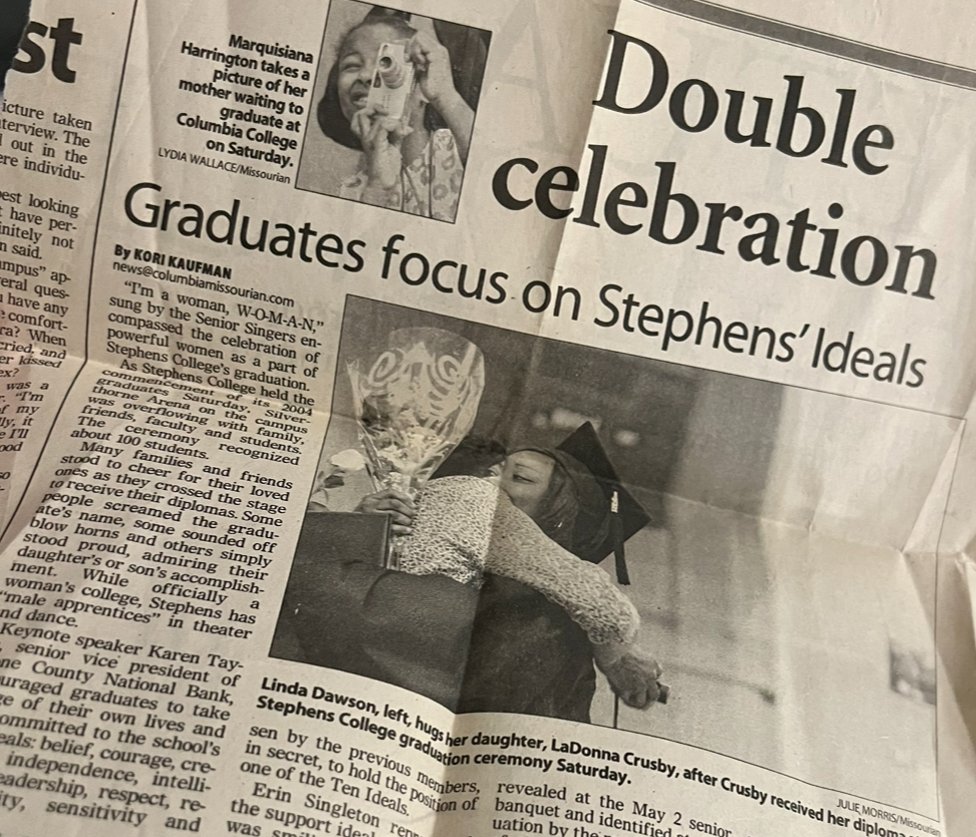
After attending FIDM, I returned to Columbia, Missouri, to attend Stephens College. Although I had moved back to the place where the crime had occurred, my positive experiences in school made it feel less painful than before.
Thanks to Stephens, I was able to continue pursuing my passion for fashion, merchandising, marketing, and management. I had the opportunity to assist with fashion shows, connect with more creative people, and thrive in the electric energy of the campus.
Pursuing my education pushed me out of my comfort zone and eventually placed me in environments where my voice could be heard and led to me connecting with others who had similar experiences.
Attending FIDM, along with Stephens, allowed me to grow in my retail career. I’ve had the privilege of meeting incredible people, working for inspiring leaders, and connecting with amazing employees. At each company, I’ve fostered a family-like atmosphere, which has been a true blessing.
Why does LaDonna Renee VST Foundation, Inc. wish to provide scholarships?
In 2009, I met a remarkable woman named Billie Sangster, who founded the nonprofit, Council for Youth Empowerment. This organization provides scholarships to titleholders who engage in community service and develop valuable life skills, such as interviewing, poise, developing a community service platform, and public speaking. I was deeply inspired by the impact these scholarships had on the participants and thought, I would love to offer a scholarship to a survivor in need of support someday —someone eager to volunteer in their community and make a difference in the lives of others.
As a teen survivor, the opportunity to create a platform and apply for scholarships based on my experiences would have given me the confidence to use my voice much sooner than at 30. If there had been a scholarship available for survivors at the time, it would have also helped ease some of the financial burden of moving to another state and attending college.
However, what I’ve learned is that it’s never too late, and building confidence takes time.
While I can’t change the past, I realize that I need to focus on what I can do today. I hope to inspire other survivors to use their voices to create change, heal themselves, and help others along their journeys.
Caroline Wanga, CEO & President of Essence Venutres, stated during her acceptance speech at the NACAN 2024 Keepers of the Dream Cultural Award ceremony, that, “To see me is trauma repair.” At 14, I longed to feel seen and understood. Applying for a scholarship or connecting with a supportive organization would have given me that sense of validation and support.
The purpose of the scholarship program is to let survivors of any age know that they are not alone and that there are people who understand and who are willing to help them succeed. I want to be a light for those experiencing darkness, reminding them that despite their trauma, they can still thrive and make a meaningful impact on the world and in their communities.
If I can inspire even one person through my experience and journey, then it will all be worth it.

A Letter from the Gray Ghost
“The Gray Ghost” is located at 1100 Rangeline St. in Columbia, Missouri. This is the home in which LaDonna and her mother lived at the time of the kidnapping.
Dear LaDonna,
You have a habit of trusting people who do not have pure intentions and who ultimately bring you harm. I watched as pieces of your beautiful heart were left shattered on the floor that unspeakable evening.
Clinging to life, death was imminent. You lay on the living room floor atop broken shards of glass, breathless and fading fast. A sense of calmness overcame you as the white light appeared, but you weren’t ready to go. You knew that you had more to do.
Like those shards of glass from your past, Your heart is broken, but it can be mended. Broken, yet still beautiful. You are not beyond repair. Your light may have dimmed that night, but it was not fully extinguished. The fire within you still burns bright.
Over the years, you have been brought back to life by your family and friends who love you dearly. You have shared your story of escape and survival with thousands who have told you that you are brave and courageous. Be confident in that. You have a purpose. Evil and disingenuous people may still cross your path, but God will give you the discernment to identify them, and no weapon formed against you shall prosper.
You will continue to experience times of uncertainty and other adverse experiences over time. Just like you did when you were in limbo between life and death, you will need to rely on your faith and remain hopeful in order to minimize the pain and discomfort. Stay strong. Fight the fear, hang on for dear life, do not let evil win.
That morning when you became so desperate to live, and were able to wiggle yourself free from death’s grip, your angels and the prayers of your loved ones were protecting you. They still are. Do not give up. You will not fail.
The memories that haunt you will not win. Nor will the darkness that creeps in only to feed off of your genuine and divine energy during the times when you are feeling the most vulnerable. Love will prevail. God loves you, and you were saved so that you could make an impact on the lives of others.
You may have left pieces of your heart on the living room floor, amongst the shards of glass that evening, and you may have felt your soul begin to drift away once the white light appeared…… However, your life was spared. You had more to do. You survived and you are blessed.
So please, let go of the haunting memories of me and the others who have caused you pain. Be free. Be kind. Continue to be YOU. Embrace your scars. They add to your uniqueness and beauty. Pray often, take risks, continue to love and support others, and THRIVE! With every heart and soul that you touch, your own heart will continue to heal.
Sincerely,
The Gray Ghost